
Vienna in Spring and Vienna in Summer: Two Different Cities, One Station
Small steps to long journey. The best trip is the one you can repeat in another season — and find a completely different city waiting for you.
Some cities are the same all year. Paris in July and Paris in April is the same Paris, only with a different temperature. Lisbon in winter is Lisbon in summer wearing a light raincoat. Venice is always Venice.
Vienna is not.
Vienna physically changes between seasons. Like a person taking off one mask and putting on another. Spring Vienna and summer Vienna are two different cities at the same address. I love them both — completely differently.
The first time I went in May — still a jacket on my shoulders, the chestnut trees just opening, the whole city still waking up. The second time in late July and August, when the air hits 30°C and the Schönbrunn gardens explode with so much green you can barely see the white statues through the lawns. That was when I realized I would come back to Vienna twice a year.
Here’s what I saw.
Vienna is a big city. You will not see it all in 2 days
The first thing to understand before going: Vienna is not Bratislava, not Ljubljana, not even Prague. This is an imperial capital, 415 km². The historic center is compact, but everything interesting is scattered across several districts: the Ring, Belvedere to the south, Schönbrunn to the west, Prater to the east, Grinzing vineyards to the north. In two days you physically cannot see everything.
So below I’ll give ratings from 1 to 10 for each major spot — pick what matters most to you and stop trying to cover it all.
Vienna in spring: a city waking up
Spring in Vienna is a process. It doesn’t arrive in one day. It creeps in.
March: not quite spring, not quite winter
In March Vienna is still gray. Parks are bare, the sky is leaden, rain turns to snow and back again. But this is also when Vienna is cheapest and quietest. Hotels in the center — €60–80 per night instead of €180 in summer. You can walk into Schönbrunn without a queue. In cafés — free tables even at 4pm on a Saturday.
April and May: Vienna explodes
Then one morning — you step out of the hotel and the city is suddenly in color. Schönbrunn is full of tulips. Volksgarten is full of roses. Prater is full of flowering chestnuts. You catch the smell of wet earth and cherry blossom at Setagayapark — in April it’s like Kyoto, without the crowds.
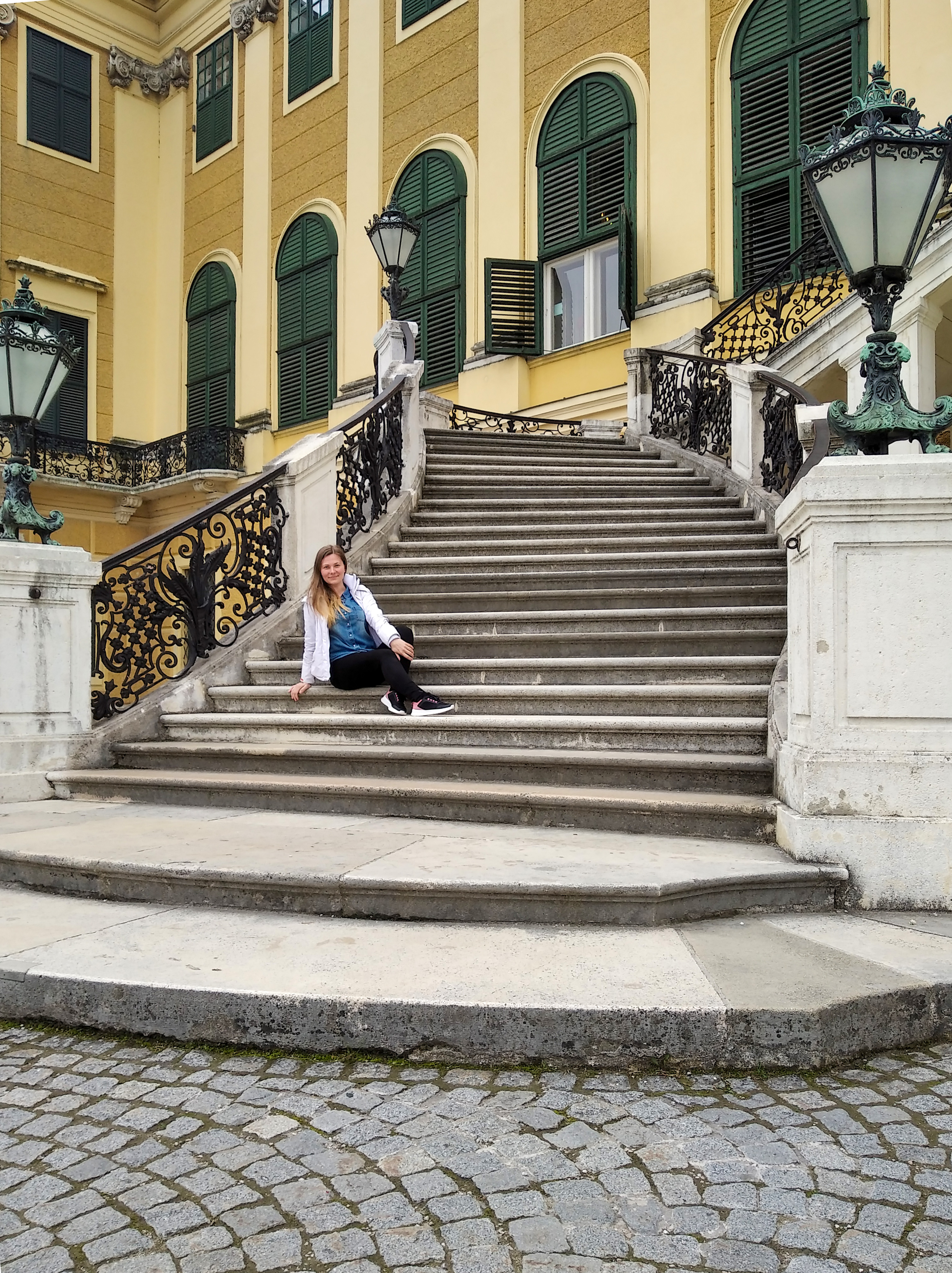
Temperatures run 15–20°C. Jacket in the morning, sweater by day, short sleeves in the evening. Dressing in layers is the Viennese spring philosophy.
Wiener Festwochen — Vienna’s biggest cultural festival — kicks off in May. Opera, theater, contemporary music across the whole city for five weeks.
May is my favorite month. If you can, go in May.
Vienna in summer: the green wave
Summer Vienna is another civilization. The first thing that hits you is how green everything is.
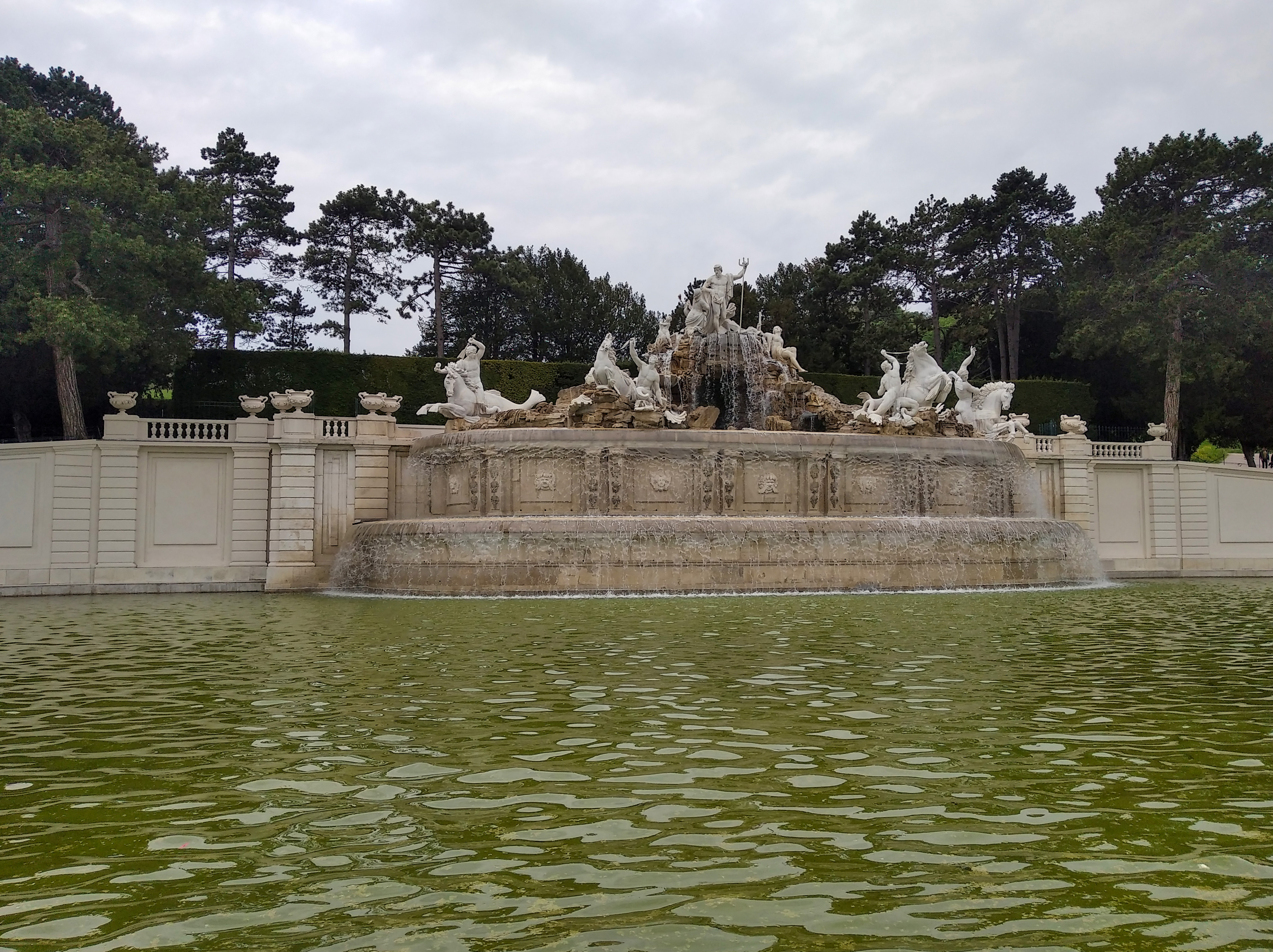
In summer the gardens look exactly the way Maria Theresa wanted them: enormous, green, limitless. In May you see the structure — the architecture of the parterres. In August you see the life. Lawns you want to fall into. Trees you want to live under.
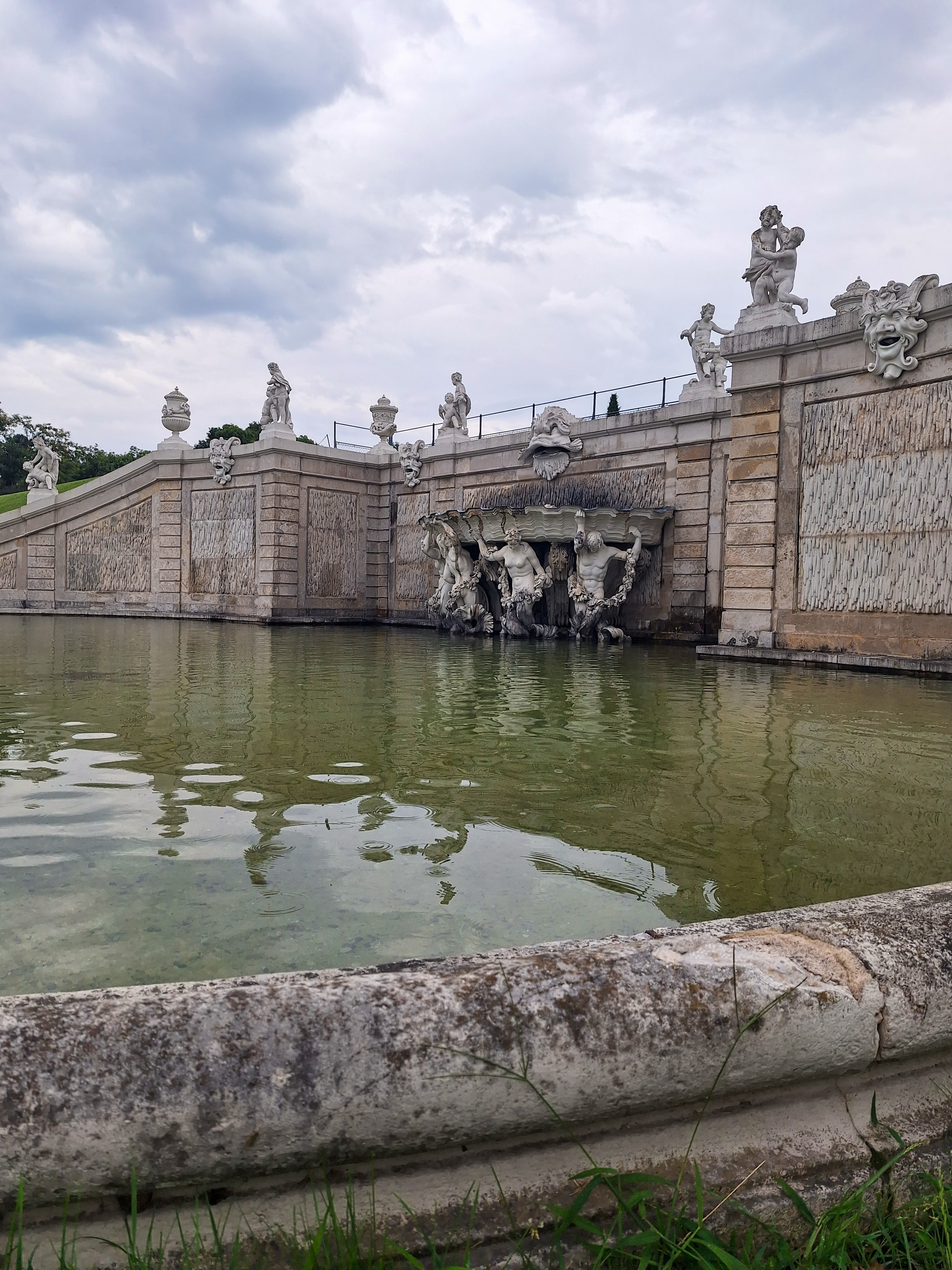
Summer upsides
The evening cool at the Donaukanal. When the sun sets, beach bars appear along the canal — sand, deck chairs, cocktails. Strandbar Herrmann, Tel Aviv Beach, Badeschiff (a pool built into a boat moored on the canal).
Rathausplatz Film Festival. All of July and August, every evening, free screenings of operas, ballets and concerts on a giant screen in front of City Hall. 20+ food stalls with food from around the world. Free.
Donauinsel — a 21 km island in the middle of the Danube, car-free. Natural “beaches” for swimming in the Danube, water around 22–24°C in August.
Heuriger in Grinzing and Nussdorf. Wine taverns on the edges of the city. Tables under chestnut trees, young wine from the owner’s own vineyard. Summer is when it’s at its best, because all of it lives outdoors.
Summer downsides
Hot. August hits 30°C+. Old buildings have almost no AC. The metro never drops below 40°C.
Expensive. Hotels in the center €180–250 per night.
The Opera and the Spanish Riding School close in July and August. If you came to see the Lipizzaner stallions or hear a performance at the Staatsoper — this is not your season.
The architecture: Vienna’s real museum is its streets
Before the ratings — one thing you notice on day one and keep noticing every day after: Vienna’s architecture is absurd. Not absurd-bad — absurd-good. The quantity of it. The detail. The confidence.
You walk down a side street that isn’t on any itinerary, and the apartment block you pass has caryatids on the façade, a fresco over the entrance, wrought-iron balcony work that would be a protected monument in any other country. Here it’s just where someone lives. You realize quickly: you don’t need to go to the “sights” to see Vienna’s architecture. You just need to look up.
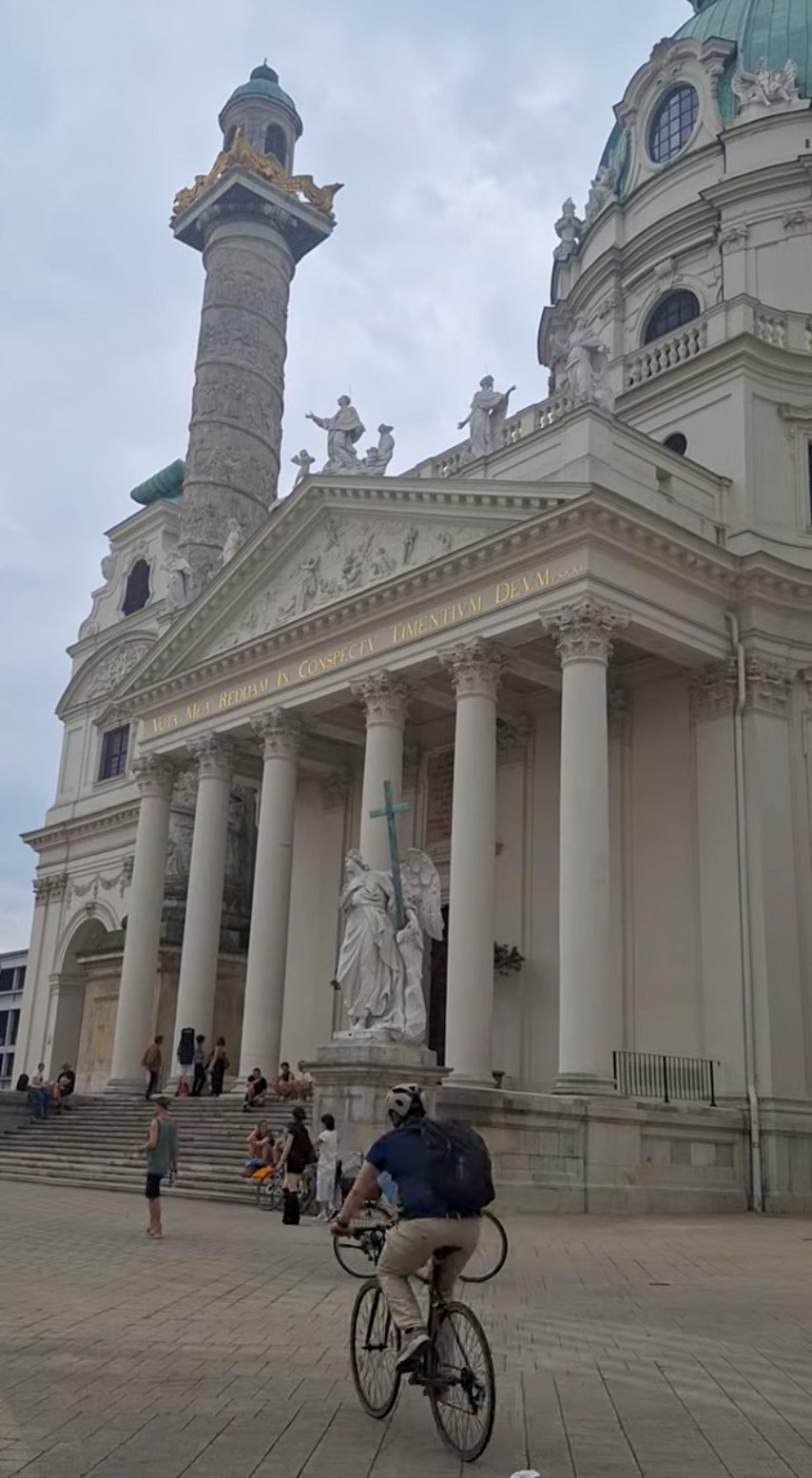
The city is a chronology of styles all stacked on top of each other: Roman foundations under Stephansdom, medieval gothic, Habsburg baroque (Schönbrunn, Belvedere, Karlskirche), the pompous Ringstrasse eclectic from the 1860s–80s (where every building copied a different era — neo-gothic for the City Hall, neo-renaissance for the museums, neo-classical for Parliament), then Jugendstil / Vienna Secession around 1900 (Otto Wagner’s metro stations, the Secession Building with its golden dome), then the socialist-modernist “Red Vienna” housing blocks of the 1920s, then the deliberately-weird Hundertwasserhaus of the 1980s.
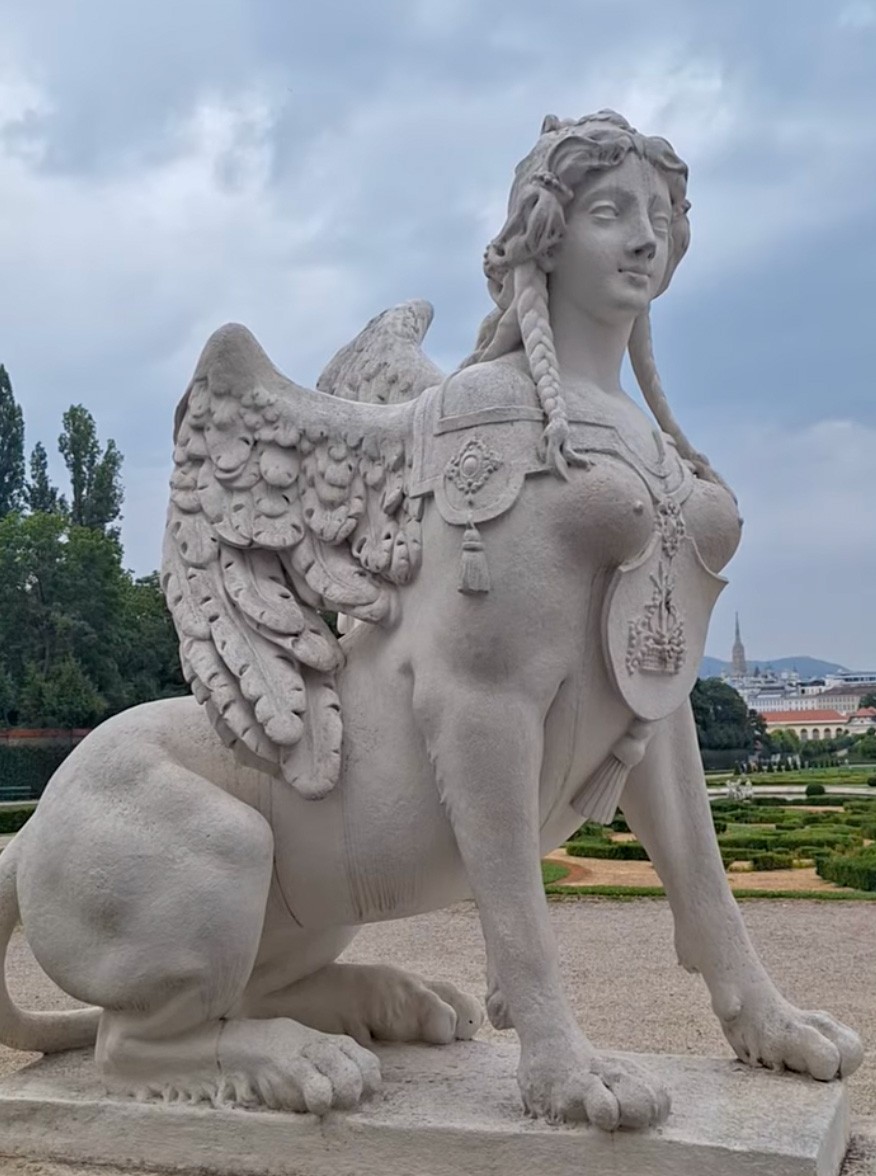
The style layers worth spotting
- Baroque (17th–18th c.) — Karlskirche, Schönbrunn, Belvedere, the Peterskirche dome, the Hofburg courtyards. Big, theatrical, Habsburg-imperial.
- Ringstrasse historicism (1860–1890) — the 5 km horseshoe of monumental buildings built when Franz Joseph tore down the medieval walls. Take tram 1 or 2 around it once, just to see the scale.
- Jugendstil / Secession (1897–1910) — Otto Wagner’s Karlsplatz metro pavilions (right next to Karlskirche), the Secession Building with “Ver Sacrum” and the golden cabbage dome, Loos’s buildings on Michaelerplatz.
- Red Vienna (1920s) — Karl-Marx-Hof in Heiligenstadt: a 1.1 km long socialist housing complex that looks like a fortress. The world’s longest residential building.
- Hundertwasserhaus (1985) — the anti-straight-line apartment block with trees growing out of windows. Divisive. Iconic.
If you only do one “architecture walk” in two days: Karlsplatz. Within a 400 m radius you get Karlskirche (baroque), Otto Wagner’s Jugendstil pavilions (secession), the Secession Building with the golden dome, the Musikverein (neo-renaissance), and the TU Wien (neo-classical). Five style eras in a ten-minute walk. Vienna in one square.
Ratings: where to spend your time if you only have 2 days
All ratings are mine, honest, after two trips. From 1 (skip it) to 10 (Vienna isn’t Vienna without it).
🏰 Schloss Schönbrunn — 10/10
The Habsburgs’ summer residence. 1,441 rooms. The gardens are free (ticket only for the interior and the Gloriette on the hill). If you pick one place in Vienna — this is it.
Hack: walk into the gardens at 7–8am when the gates are open but the tourists are still asleep. Empty in front of the palace, only Viennese joggers on the paths. Walk up to the Gloriette at the top of the hill — all of Vienna is at your feet from up there. Come back down at 10 and then buy your palace ticket, when the gardens are already full.
🎨 Belvedere Palace — 9/10
Two palaces (Upper and Lower) with a grand French garden between them. The Upper Belvedere holds Klimt’s “The Kiss”. You know the image from every poster — but standing in front of the real thing, 180×180 cm of gold leaf, is a different experience.
Garden is free, palace ticket €18. Go first thing in the morning or in the last two hours — that’s when you can actually stand in front of “The Kiss”.
⛪ Stephansdom — 10/10
The cathedral at the center of the city. You can’t come to Vienna and not go in. Free entry. North tower by elevator — €6. South tower on foot — 343 steps, €5.50.
🛍 Kärntnerstraße + Graben + Kohlmarkt — 7/10
The triangle of the main pedestrian streets. Beautiful. Touristy. Pricey. Walk it once, in the evening, when the shop windows are lit and the cafés start folding in their terraces. In the afternoon it’s a crowd nightmare.
🎭 Hofburg + Sisi Museum — 8/10
The Habsburgs’ winter residence. Today, also the federal president’s office. The Sisi Museum is about Empress Elisabeth — who loved traveling, hated court life, and died stabbed by an Italian anarchist in Geneva. If you love history — 10/10. If you came for palaces + shopping — 6/10.
🎡 Prater (Riesenrad) — 6/10
The 1897 Ferris wheel, famous from “The Third Man”. Ticket €13.50. View: all of Vienna.
Honestly: the view from the Gloriette at Schönbrunn, or from Stephansdom’s tower, is better and cheaper. Prater is more about nostalgia and fairground atmosphere than about the panorama.
🌳 Volksgarten + Burggarten — 8/10
The two parks beside the Hofburg. Volksgarten has the prettiest rose garden in Vienna (blooms May through September). Burggarten has the Mozart statue and the tropical Palmenhaus (with a café inside).
Free. Ideal for a picnic with bread and cheese from the Naschmarkt.
🎨 Kunsthistorisches Museum — 9/10
One of the greatest art collections in Europe: Bruegel, Vermeer, Rembrandt, Rubens, Velázquez. If you have at least 3 hours — go. If you have 1 hour — don’t, you’ll just run through it.
Ticket €21. Tuesday–Sunday, 10:00–18:00 (Thursday until 21:00).
🏛 MuseumsQuartier (MQ) — 7/10
The contemporary-art quarter. Leopold Museum (Schiele, Klimt, Kokoschka), MUMOK (contemporary). Around it — good bars and a courtyard of big beanbag cubes where Viennese sit in the evening. If you love 20th century — 10/10.
🎼 Staatsoper — depends on the season
September to June: 10/10. Standing-room tickets (Stehplatz) €10–15, bought at the door one hour before curtain. Don’t take my word for it — I’ve done it myself, it works.
July and August: 2/10. The Opera is closed for summer break. You can only tour the building.
🍽 Naschmarkt — 8/10
Vienna’s most famous market. Saturday is Flohmarkt (flea market). Lebanese, Turkish, Viennese food stalls. Prices higher than in the outer districts but quality is solid.
🛥 Donaukanal — 9/10
The embankment of the Danube canal — where young Vienna hangs out. Street art on the walls (the best in Europe, in my eyes). Beach bars. Restaurants on the water. Summer — 10/10. Spring — 6/10 (the bars haven’t opened yet).
🚂 Tram 1 or 2 around the Ringstrasse — 10/10
Best day-one hack. For €2.40 (one ticket) you get a 40-minute tour past every major landmark: City Hall, Parliament, University, Burgtheater, Hofburg, Opera, MuseumsQuartier. Take the right-side window seat.
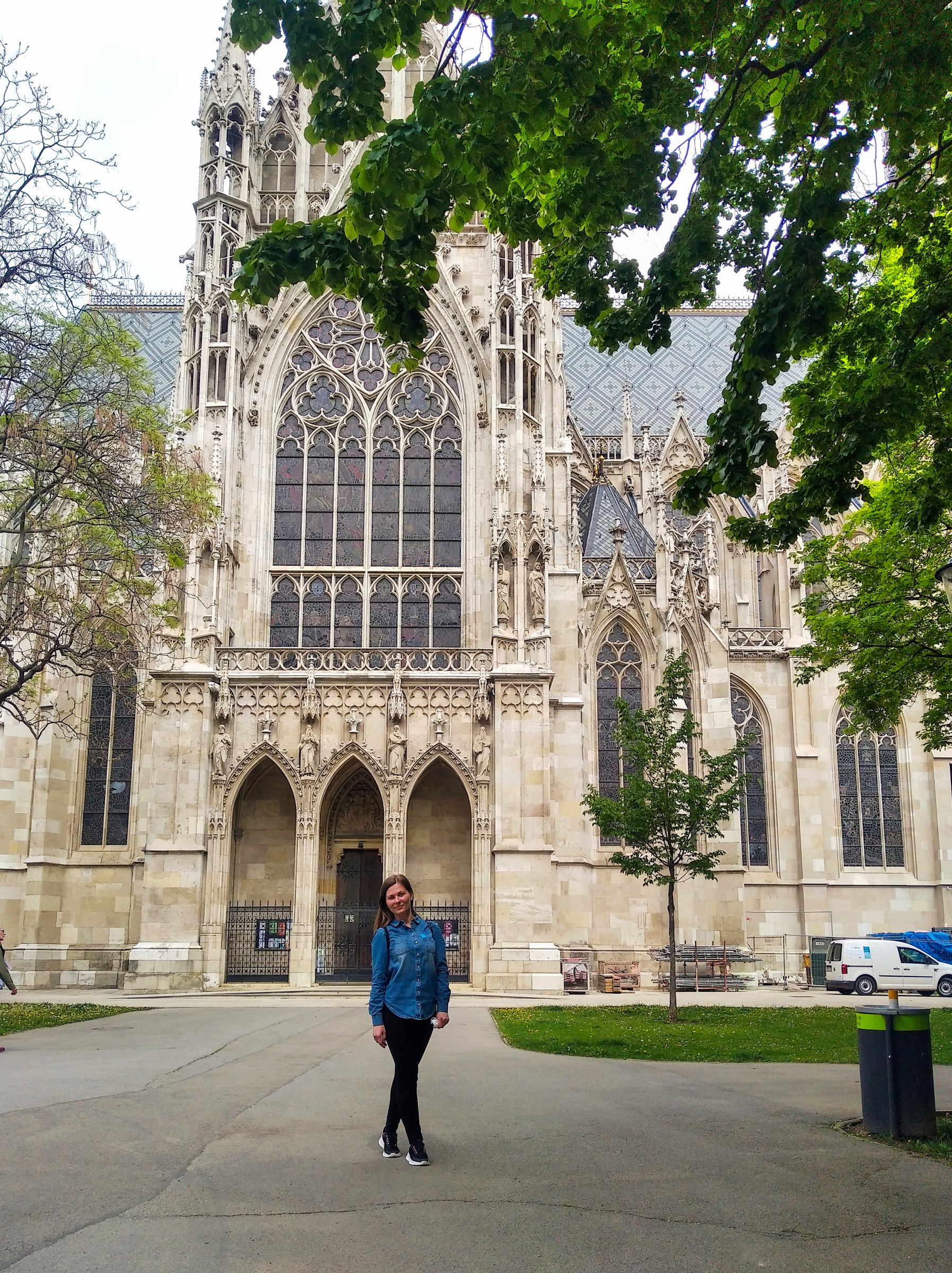
⛪ Votivkirche — 6/10
Neo-gothic church built in thanks for Emperor Franz Joseph surviving the 1853 assassination attempt. Outside — 9/10 (I honestly like it more than Stephansdom). Inside — 5/10 (sparse for neo-gothic).
Free. Stop for a photo of the façade — one of the prettiest on the Ring.
🐎 Spanische Hofreitschule — 8/10 (if open)
The famous Lipizzaner riding school. Morning trainings from €15, full performances from €28.
Closed in July and August. So this is strictly for spring or autumn trips.
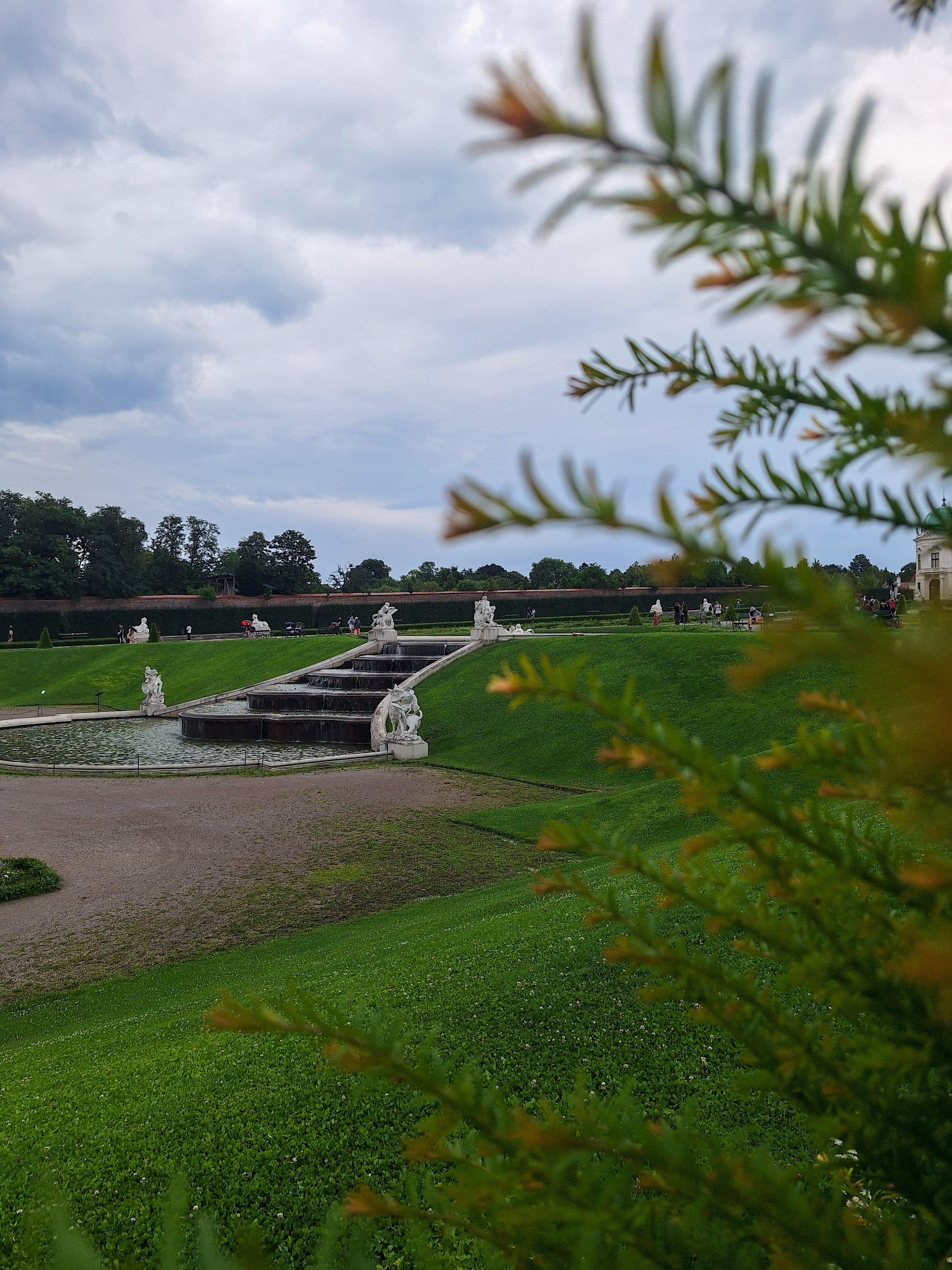
🏰 Schloss Hof (day trip) — 9/10
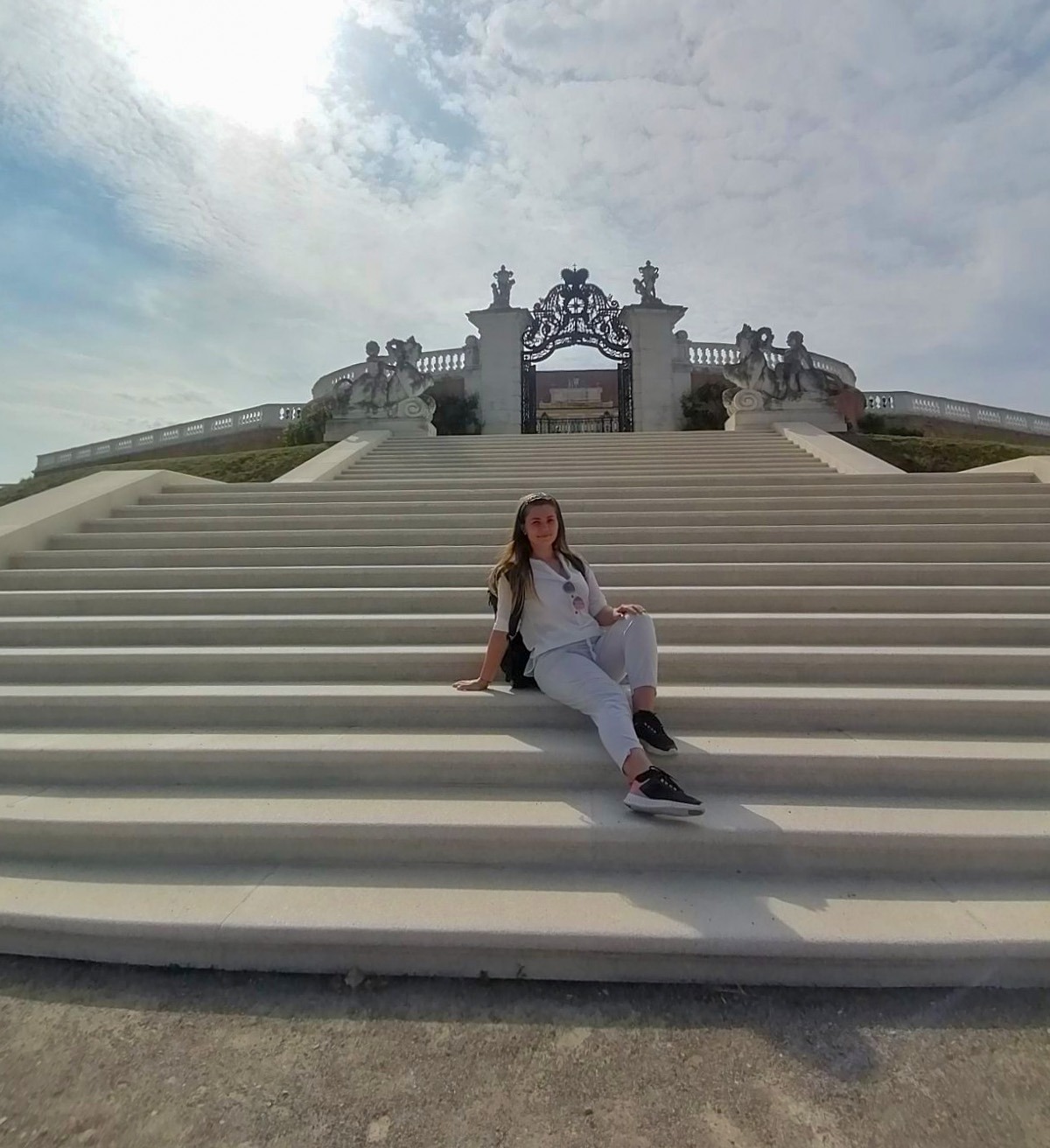
45 minutes east of Vienna, on the Marchfeld plain — Schloss Hof, one of the most beautiful baroque palaces in Austria. It belonged to Prince Eugene of Savoy, then to Maria Theresa. The terraced gardens cascade down the slope with fountains, statues and a view across the Danube plain.
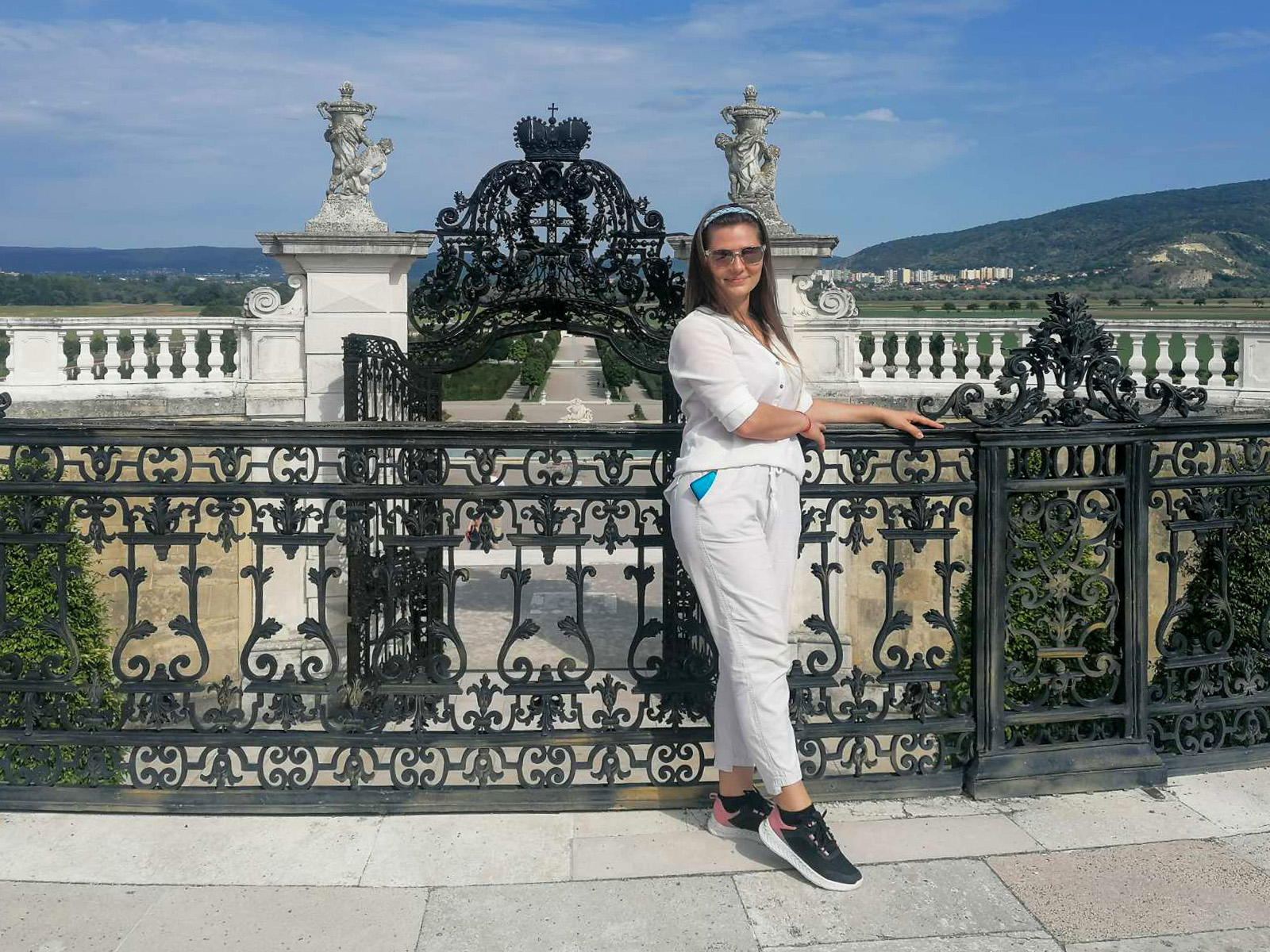
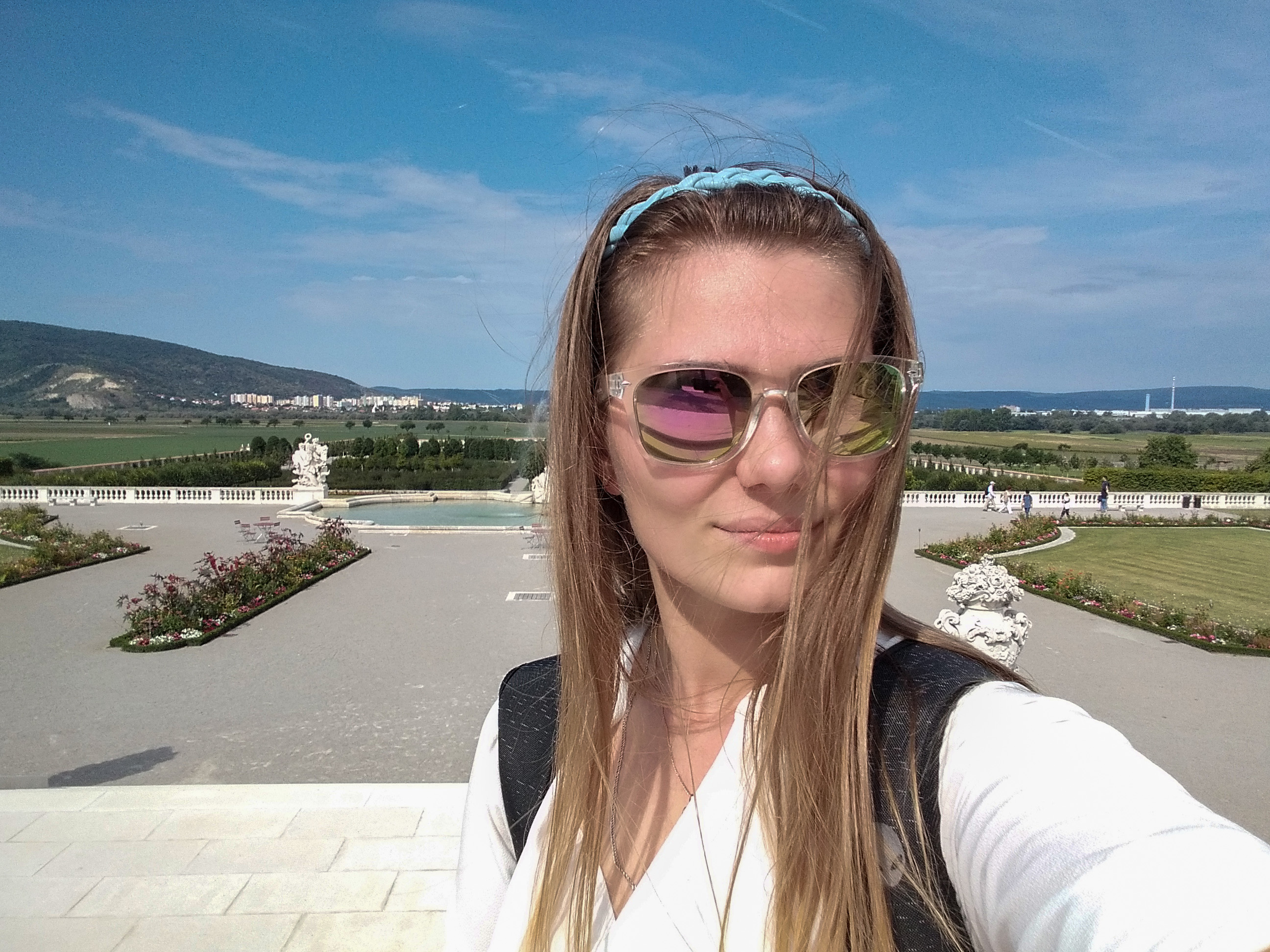
How to get there: ÖBB bus from Wien Erdberg (50 min) or by car/taxi. Free parking.
Who should go: if you’ve already done Schönbrunn and Belvedere, this is your third big palace. If not — do Schönbrunn first.
For 2 days: my route
Day 1 — Center and the Ring
- 8:00 — coffee at Café Central (Herrengasse 14)
- 9:00 — Stephansdom (before the crowds)
- 10:00 — Hofburg and Sisi Museum
- 12:00 — lunch: schnitzel at Figlmüller (Wollzeile 5)
- 14:00 — Kunsthistorisches Museum (3 hours)
- 17:00 — tram 1 or 2 around the Ringstrasse (full loop, 40 min)
- 19:00 — dinner at Naschmarkt or near MuseumsQuartier
Day 2 — Schönbrunn and Belvedere
- 7:30 — Schönbrunn gardens (free, empty)
- 9:00 — Gloriette (panoramic café on the hill)
- 10:30 — walk back down, enter the palace
- 13:00 — lunch: Würstelstand Bitzinger by the Albertina (Käsekrainer + a beer)
- 14:30 — Belvedere, Klimt’s “The Kiss”
- 17:00 — Donaukanal (summer) OR Volksgarten rose garden (spring)
- 19:00 — Heuriger in Grinzing (Mayer am Pfarrplatz, bus 38A)
If you have a third day
- Spring — Wachau (Danube valley, apricot blossom)
- Summer — Schloss Hof + swim at Alte Donau
- Any season — Kahlenberg + walk through the vineyards
Food in Vienna, by season
Spring
- Spargelzeit — white asparagus season, late April to June. The main spring dish.
- Bärlauch (wild garlic) — in every spring dish: soups, pasta, gnocchi.
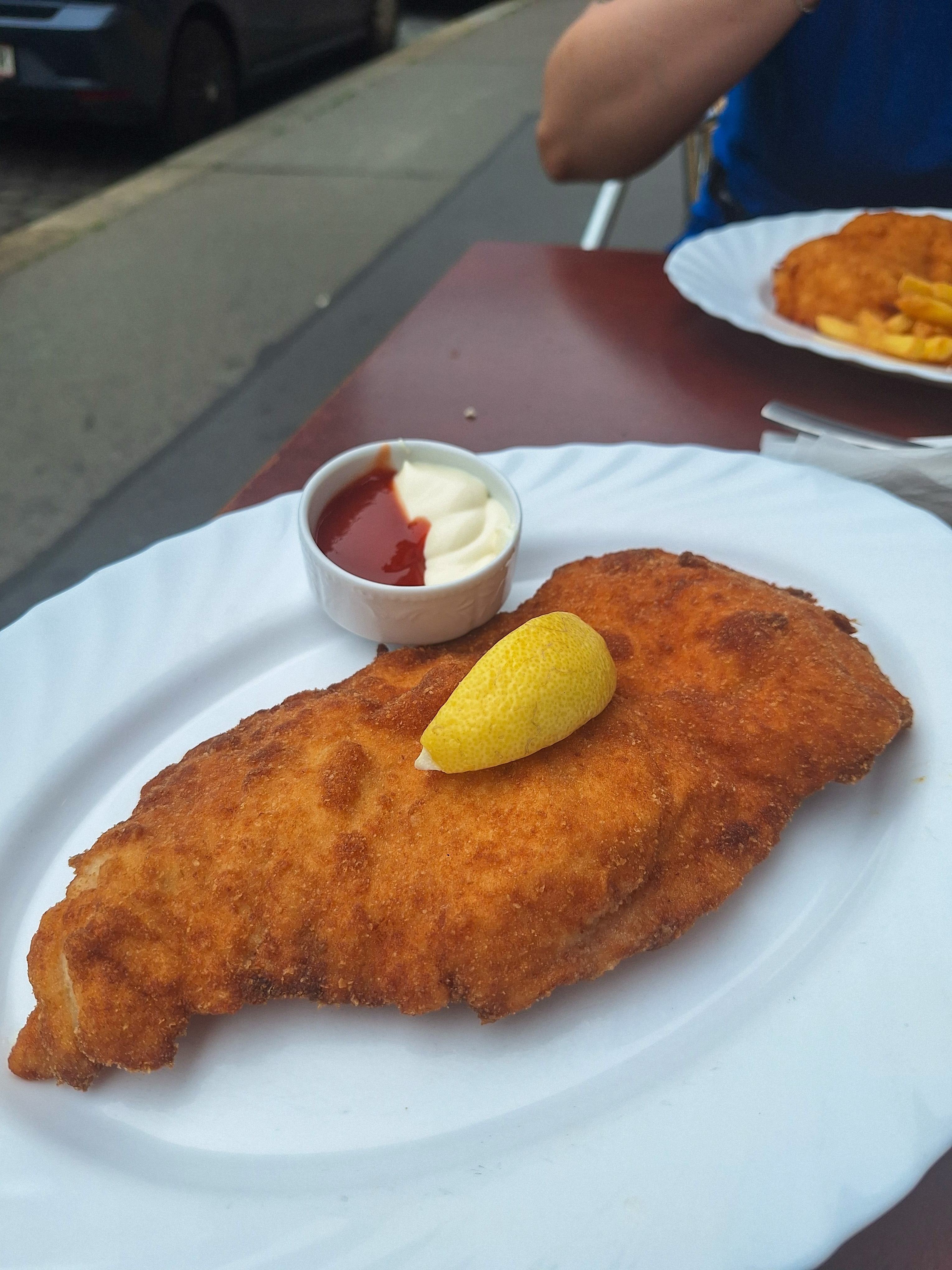
- Wiener Schnitzel with lemon — best at Figlmüller or Plachutta.
- Tafelspitz — boiled beef with root vegetables. Habsburg classic.
Summer
- Sachertorte with vanilla ice cream instead of whipped cream (summer rule).
- Eis at Zanoni & Zanoni by Stephansdom — legendary queue, worth it.
- Würstelstand Bitzinger by the Albertina — Käsekrainer (cheese-filled sausage).
- Sommerweine — light whites from Burgenland and Lower Austria (Grüner Veltliner, Welschriesling).
So — spring or summer?
Go in spring if:
- You want to see classic Vienna without the crowds.
- You love opera, theater, concerts (the season is in full swing).
- You value café culture and a slow pace.
- You’re on a budget (March–April is cheapest).
- You want photos of flowers and park avenues.
Go in summer if:
- You want to see living Vienna — the canal, the parties, the festivals.
- You plan to swim (Danube, Alte Donau).
- You like street food and open-air concerts.
- You’re traveling with kids (Donauinsel is perfect).
- You want the city at its greenest for photos.
The best compromise: early June or late August. Warm, not yet or no longer peak, events running.
Where I stayed: Leonardo Hotel Vienna Hauptbahnhof
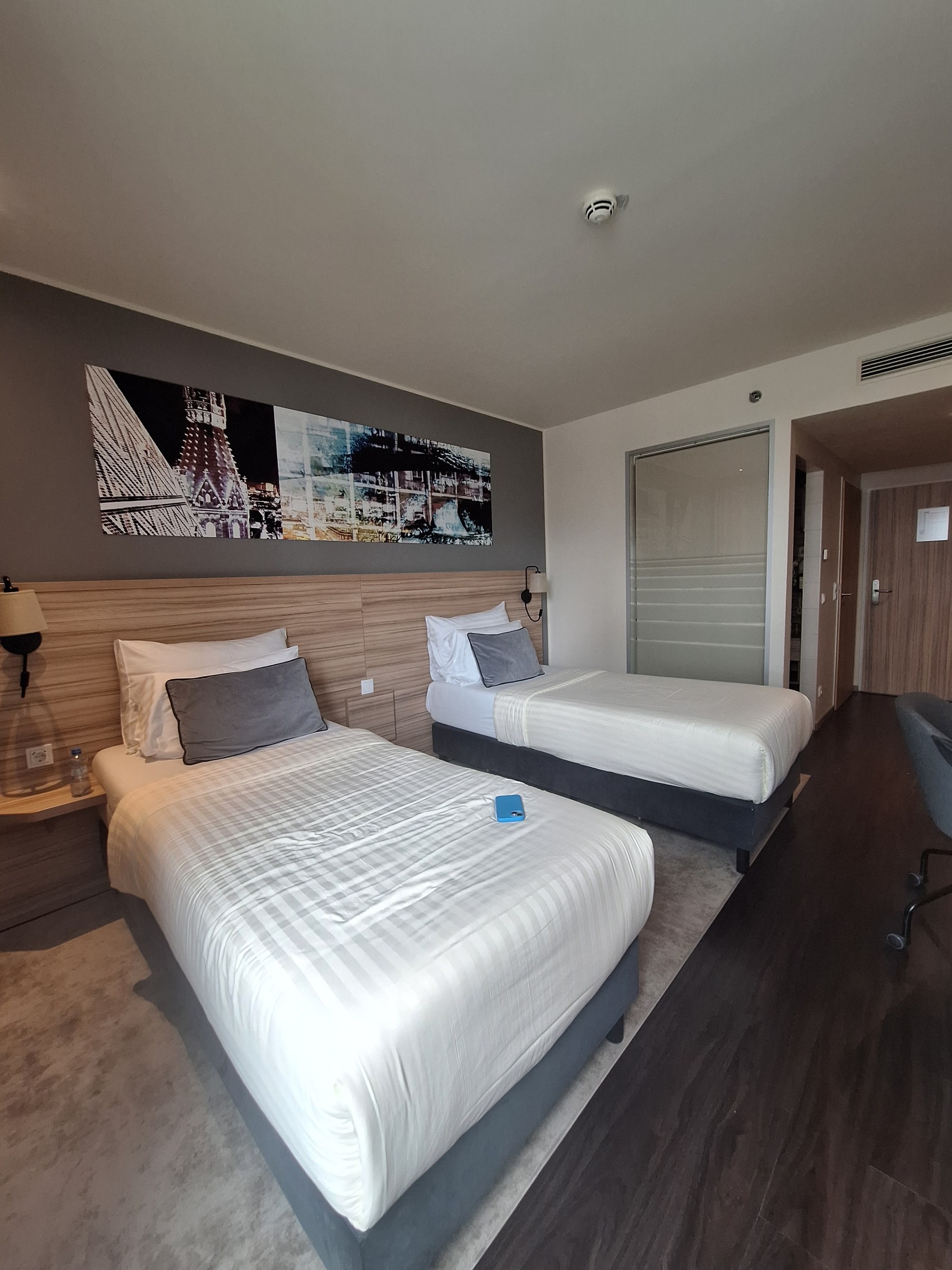
For both trips I stayed at Leonardo Hotel Vienna Hauptbahnhof (formerly Star Inn Premium) — and I’d book it again with my eyes closed.
Why it works:
- Location. 3-minute walk from Wien Hauptbahnhof — the central station. That means RailJet trains from Vienna Airport, from Bratislava, from Budapest, all arrive a rolling-suitcase distance from your bed. Tram D at the door takes you to Belvedere in 5 minutes and to the Opera in 10.
- Belvedere is right there. The Upper Belvedere palace is a 10-minute walk. I did sunrise strolls in the Belvedere gardens before breakfast — unbeatable.
- Modern, quiet, spotless. Rooms are new, beds are firm, shower pressure is real, AC is real (which matters in August Vienna).
- Breakfast buffet. Strong coffee, fresh Kaiser rolls, good cold cuts, fruit, smoothies. Not fancy, but fuels an 8-hour walking day.
- Price. In May: €90–110 per night. In peak August: €140–170. Cheaper than anything equivalent inside the Ring.
Who it suits: anyone who cares about getting around efficiently, being close to Belvedere, and not paying a tourist premium to sleep five minutes from Stephansdom. For a 2-day trip where you’ll be moving constantly, staying next to the Hauptbahnhof is a quiet superpower.
Getting there
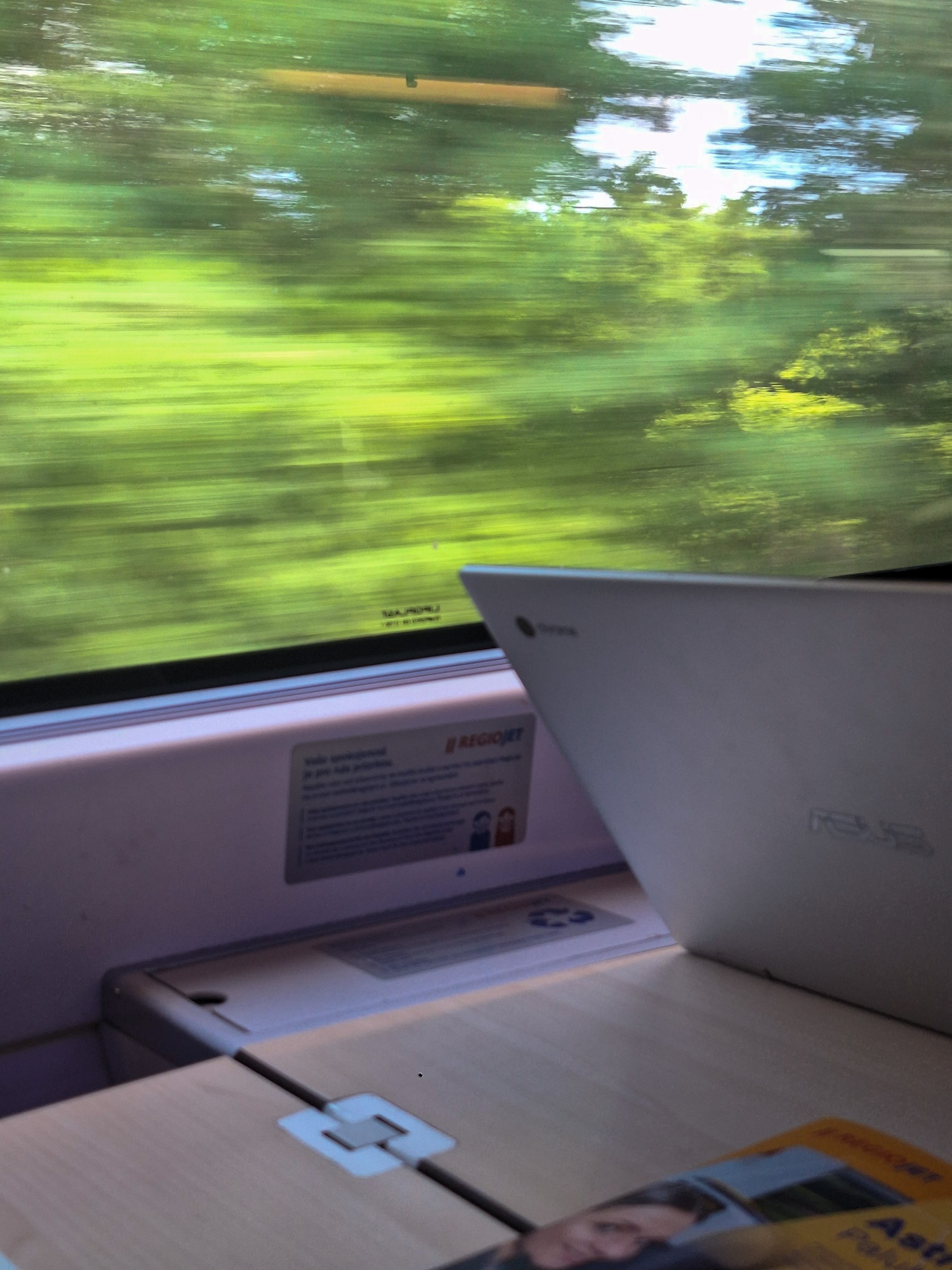
My recommendation: RegioJet from Bratislava
After trying Flixbus, ÖBB REX and RegioJet in both directions, my vote goes to RegioJet. Here’s why:
- €10–15 one-way if booked 2–3 days ahead (as cheap as Flixbus).
- 1 hour from Bratislava hl.st. to Wien Hbf — same as the ÖBB REX, faster than the bus in traffic.
- Free water, coffee and tea handed out on board. A small thing, but after six trains elsewhere in Europe where you pay €4 for a bad coffee, it matters.
- Huge seats with real tray tables, reliable power sockets, working Wi-Fi, assigned seating. Feels like business class at Flixbus prices.
- Arrives at Wien Hauptbahnhof, where half the good hotels are (including mine — see above) and tram D takes you straight to Belvedere and the Opera.
Book on regiojet.com or the RegioJet app — not on third-party aggregators, since those mark up the price.
Other options
-
Slovak Lines / Flixbus bus — 1 hour, from €8. Cheapest, but traffic at the border is unpredictable.
-
ÖBB REX train — 1 hour, €16. Reliable, hourly, but basic.
-
Car — 70 km, 45 minutes.
-
Twin City Liner catamaran on the Danube — 1h15, €35. Summer only. A slow, scenic, once-in-a-lifetime approach to Vienna from the water.
-
Vienna Airport (Schwechat) — 20 min by CAT train (€12) or S-Bahn S7 (€4.30).
-
Inside Vienna — get a Wiener Linien 24h ticket for €8 (all metro/tram/bus). Or a 72h ticket for €17.10 if you’re staying three days.
My ritual: twice a year
I go to Vienna twice a year now. Once in May, once in August. Once for the slow, cultural, blooming city. Once for the green, loud, late-evening one.
This is one of the big lessons of travel: you don’t have to fly to new places to feel something new. You can come back to the same city in another season — and it’s already a different trip.
Your first step
Vienna is the perfect starter for anyone who doesn’t travel much yet. Close. Safe. Simple. Beautiful. No language barriers.
And if you’ve already been to Vienna — try going back in another season. You’ll meet a city you haven’t seen before.
You don’t need big plans. You don’t need two weeks off. You don’t need the perfect moment.
You just need one early morning bus — the 7:30 from Bratislava — and by 8:45 you’re drinking a mélange at Café Central.
ISMO LADJO — small steps, long journey.
Vienna is a city you can “collect” by season. Spring — one collection. Summer — another. Autumn — a third. Winter with the Christmas markets — a fourth.
Open Slovak Lines or Flixbus. Buy a ticket for this Saturday. €10.
Your first collection starts tomorrow.
Share this post
Some links on this page are affiliate links — I may earn a small commission at no extra cost to you.
Unforgettable experiences await in austria
Local guides, skip-the-line tickets, and unique adventures you won't find on your own.