
Mallorca, Slowly: Seven Days Between Ca'n Pastilla, Palma and the Wooden Train to Sóller
Small steps to long journey. You don’t need a life plan to take the trip of your dreams. You just need to take the first small step.
I thought twice before writing this one. So much has already been said about Mallorca that it feels like there’s nothing left to add. Magaluf, all-inclusives, stag parties, German tour buses. That version of the island is real, I won’t pretend otherwise. But there is another Mallorca — and I found it by walking twenty meters off the main street.
I stayed in Ca’n Pastilla, a small old fishing village tucked between Palma Airport and the city itself. It turned out to be the best decision I made on the whole trip. Not because it was glamorous — it absolutely wasn’t — but because it had a character. A stubborn, salty, lived-in character that most resort strips have long since polished off.
Here are seven days that changed the way I think about travel.
Ca’n Pastilla: why I won’t book in the center of Palma again
The first thing you realize about Ca’n Pastilla is that it isn’t really a resort in the “all-inclusive” sense. It’s an old fishing village that got swallowed by the bay of Palma, and somehow managed to keep its narrow lanes, its 7am bakeries and its ordinary-Spanish-town feeling — a town that just happens to have a beach.
Three reasons I’d pick it over a central Palma hotel every time:
1. The airport is five minutes away. Literally. A taxi is €10, the A2 airport bus is €5. When you land late at night it’s a lifesaver. And the planes coming in low over the beach become their own attraction — I sat on the sand reading tail numbers like it was a show.
2. The beach starts at your hotel. And it’s not just any beach. It’s the start of Playa de Palma — a 4.5 km strip of wide, gently shelving white sand. You can wade out twenty meters before the water reaches your waist. The kind of beach kids, grandparents and slow swimmers all want.
3. The Balnearios. Do you know what a balneario is? Neither did I, until I got here. They’re numbered beach bars — Balneario 1, 2, 3… up to 15 — strung along the sand like a rosary. Each has its own personality. One is for families, one is for surfers, one runs a DJ at sunset. Locals say things like “meet me at Balneario 6.” It functions as an address, but tastier.
The small things that surprised me
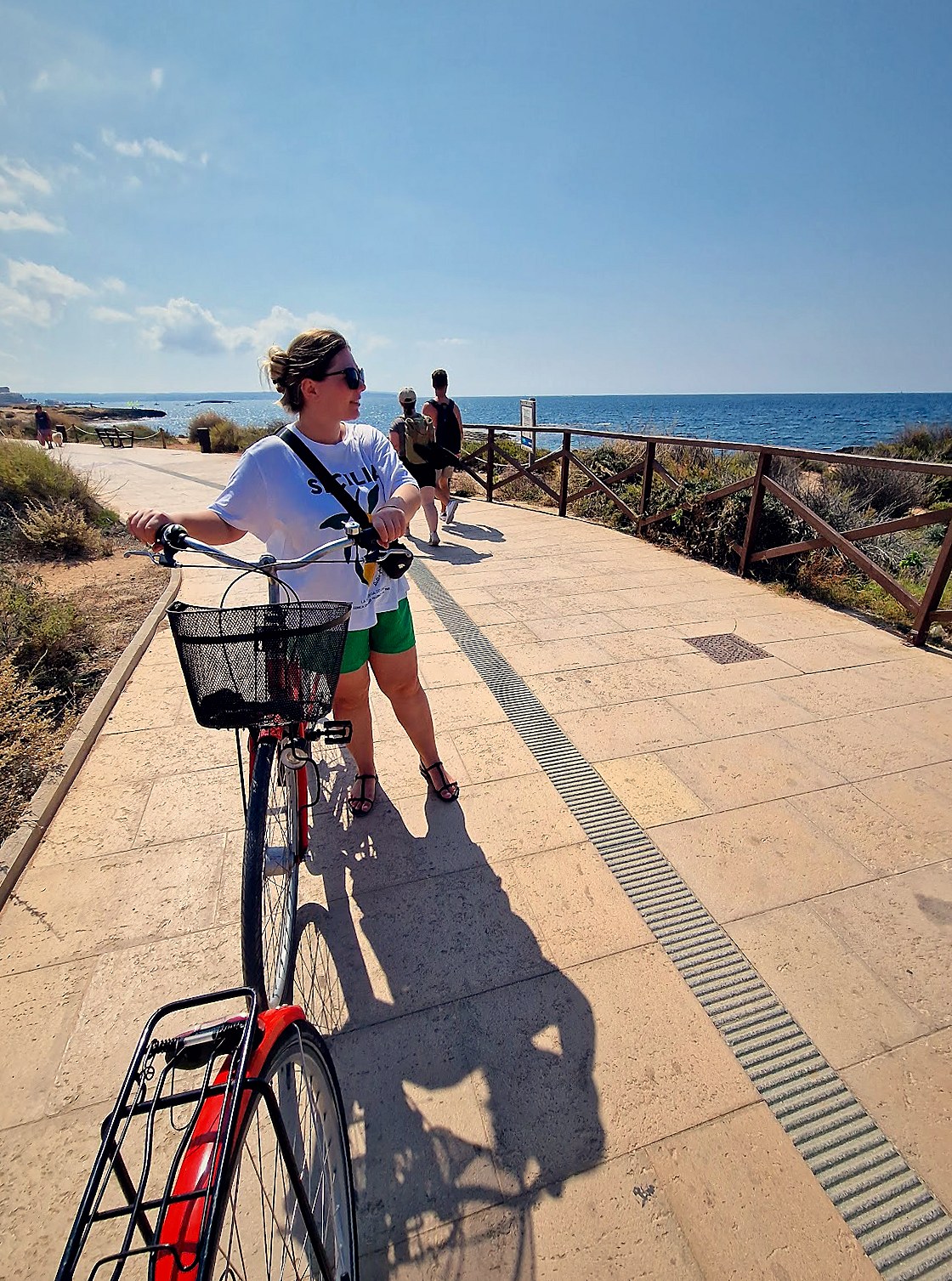
- An 11 km flat boardwalk from Ca’n Pastilla to S’Arenal — made for bikes, inline skates, or an unhurried evening stroll.
- A farmers’ market twice a week right on the main square. A kilo of Sóller oranges: €2. Tomatoes, jamón, olives.
- A tiny tourist train that runs the length of the promenade. It sounds touristy — until you notice that at 5pm it’s full of Spanish grandmothers with their grandkids. It’s local transport.
- The water here is visibly cleaner than in Magaluf, which is a common complaint in that town’s reviews. I can confirm.
S’Arenal: less glossy than the blogs, and that’s a plus
The next day I walked the promenade to S’Arenal. Three and a half kilometers, and worth every step.
S’Arenal has a rough reputation — a certain kind of German student comes here to drink a week away. And yes, there is a street of beer bars where sangría-house music plays all day. But that is one street. The other S’Arenal is:
- Aqualand El Arenal — one of Spain’s largest water parks. If you arrive with kids, this is non-negotiable.
- A working marina with fishing boats and small charter catamarans that run to Es Trenc.
- Back-alley tapas bars two blocks behind the seafront, menus in Spanish and Catalan only, lunch for €12 instead of the €25 you pay on the waterfront.
The best tapas of the trip I ate in a place whose name I didn’t even catch. I sat down, asked for “lo que coméis vosotros” — “whatever you eat yourselves” — and the waiter brought me pa amb oli (bread rubbed with tomato, olive oil and jamón) and a plate of calamares a la romana. €14 total, glass of wine included. This is when you start to understand why Spaniards describe their food as “alma” — soul.
Palma de Mallorca: a cathedral that grows out of the sea
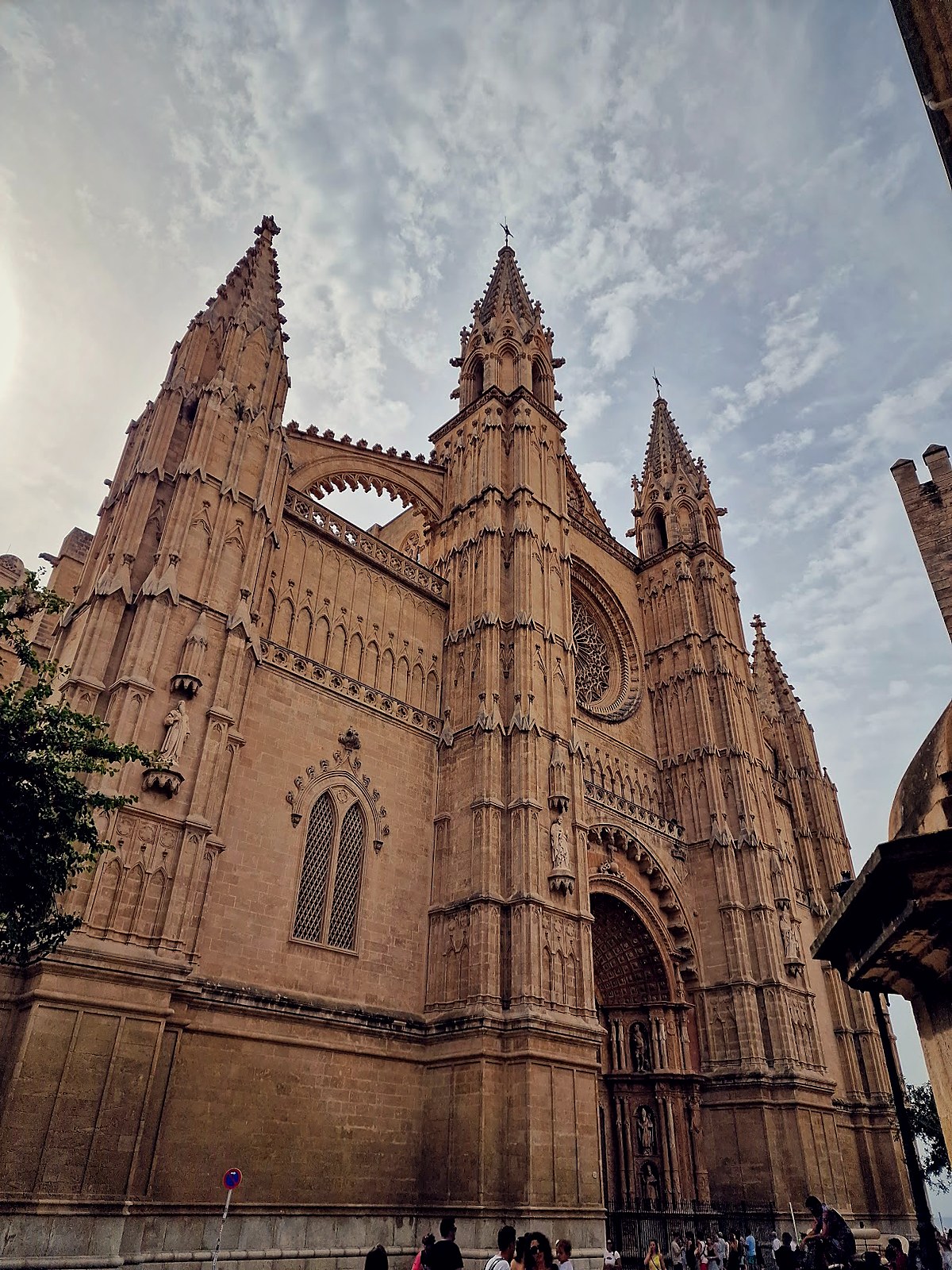
Palma is a city you should meet from the water. I took the bus, but the moment La Seu appeared — a gothic cathedral planted right on the shoreline — I understood I’d come in from the wrong side. Next time I’ll walk in along Paseo Marítimo.
What genuinely stopped me
La Seu (Santa María de Palma Cathedral). This isn’t just any gothic. In 1904 Antoni Gaudí was invited in to refurbish the interior — he added the wrought iron canopy above the altar and the ceramic mosaics along the walls. The rose window on the facade is the largest gothic rose window in the world: 13.8 meters across. Twice a year — on February 2 and November 11 — the morning sun passes through it and projects a mirrored copy onto the opposite wall, creating a “figure-of-eight” of two identical colored rose windows. Only locals know about it.
Bellver Castle. The only circular castle in Spain. Fourteenth century. It sits on a pine-covered hill with a full 360° view of the bay. And “360°” isn’t a figure of speech here.
The old town. Narrow streets, courtyards full of orange trees, tiny galleries, hole-in-the-wall tapas bars. I got lost somewhere in La Lonja and stumbled into Tast — one of the best lunches of the trip. Patatas bravas, Galician-style octopus, a glass of vermouth. €22.
Mercat de l’Olivar. Palma’s largest food market. You can buy fresh fish here and have it cooked for you at one of the little kitchen stalls next door. That’s what locals do on a weekend morning.
What surprised me less pleasantly
Palma is more expensive than mainland Spain. I’d come in from Madrid and felt it immediately — coffee, tapas, hotels, all running 20–30% higher. The quality is there, if you walk away from the main streets.
And Palma is deeply international. Waiters default to English or German. If you try “por favor” and “gracias” you’ll watch their expression shift — Spanish manners are still a currency that buys better service everywhere on this island.
Ferrocarril de Sóller: the best day of the trip
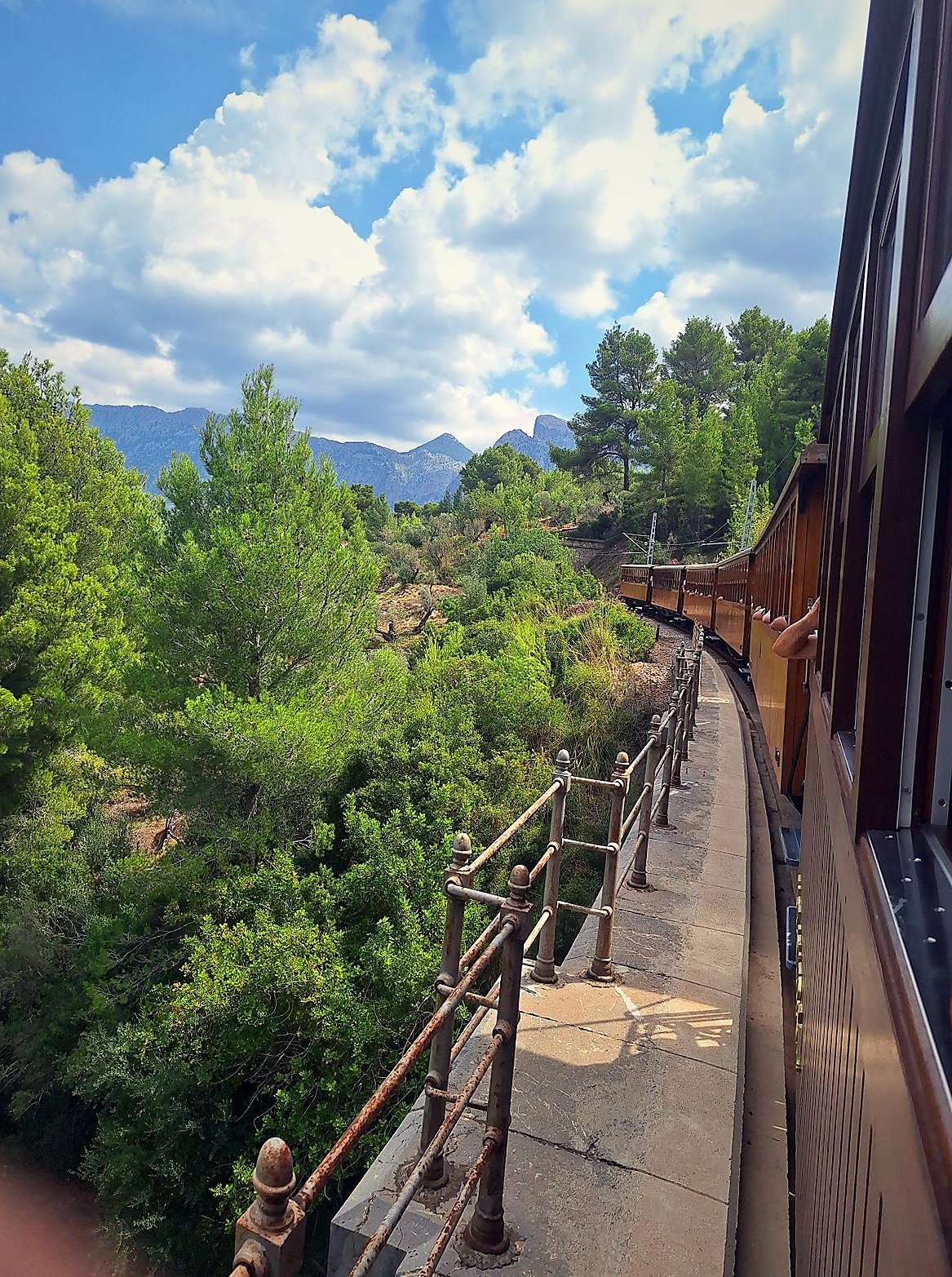
I didn’t expect one hour on a wooden train to become the most vivid memory of Mallorca. But there it is.
The Ferrocarril de Sóller is a narrow-gauge railway that links Palma with the mountain town of Sóller, across the Serra de Tramuntana. It has been running since 1912. One hundred and thirteen years. The same wooden carriages. The same brass window latches. The same Swiss station clock on the platform at Plaça d’Espanya.
How it felt
I showed up at 9:30 for the 10:10 departure. An old wooden station with “FERROCARRIL DE SÓLLER” carved above the entrance, a platform with a timber roof, a stationmaster with a whistle. I bought my ticket at the booth (cash only — this caught me off guard): €25 one way, €32 round trip with the tram add-on.
The carriage is a time machine. Varnished wood. Brass wall sconces. Windows you open by hand — you just pull the sash down. Leather seats. Then: a whistle, a jolt, and you’re rolling.
The first twenty minutes are flat — fields, small farms, almond groves. Then the train climbs. Thirteen tunnels through the Tramuntana. Every tunnel is a few seconds of darkness, and when you come out the other side the Sóller valley is below you — orange groves to the horizon, with 1,445 m peaks pressing down on both sides.
Cinc-Ponts is the five-arched viaduct. The train takes it slowly and you hold your breath. Then the scheduled stop at Mirador Pujol d’en Banya: ten minutes, everyone piles off to photograph the valley. This is the moment you understand why Tramuntana is a UNESCO site and not just a scenic backdrop.
Sóller: the town you weren’t expecting
Sóller is a small town in a valley surrounded by mountains. Locals call it “the valley of gold” — for the oranges that have grown here for centuries, and for the fact that those oranges are the whole reason the railway exists. In 1911 the townspeople pooled their money to build it themselves, to move citrus to Palma. Hence the unofficial name: the Orange Express.
Plaça de la Constitució, the central square, has an enormous plane tree in the middle, the church of Sant Bartomeu (whose facade, yes, was designed by a disciple of Gaudí) and cafés all around. I ordered a fresh Sóller orange juice (€4, but it tastes like honey) and a helado de naranja — orange gelato. Then I sat on a bench under the plane tree and did nothing for an hour. For the first time in a long, long time.
The tram to Port de Sóller
From Sóller to the port runs a wooden tram from 1913. Five kilometers through orange groves, fifteen minutes, €10. It rattles, it clangs its bell, it slows for children on bikes and the occasional dog. On some stretches it threads between houses so closely you could almost touch their balconies.
Port de Sóller itself is a small horseshoe bay, boats, gulls, waterfront restaurants. I had arroz a banda — a seafood rice — with a glass of vino blanco for €18. In central Palma that plate would have been €35.
Small hacks
- Sit on the right-hand side heading from Palma — the best valley views are on that side.
- Show up thirty minutes early; popular departures fill up.
- Bring a light layer — the windows open and the mountains get breezy even in summer.
- There’s no air conditioning. In July and August this matters. Bring water.
Coll d’en Rabassa: the neighborhood I didn’t know I needed
One morning I wandered into Coll d’en Rabassa — a residential district between Palma and Ca’n Pastilla. I got there by accident, just following the shoreline.
This is unsellable Mallorca. Women sitting on benches, gossiping in Catalan. Kids pedaling to school. In a small corner bakery an old man sells ensaïmada — the spiral pastry of Mallorca, dusted with icing sugar — for €1.20 each. Warm, buttery, melts in your mouth. You understand at first bite why this pastry is a national symbol.
There are no attractions here. There is life. And that, it turned out, was what I’d been looking for without knowing it.
Mallorcan food: more than paella
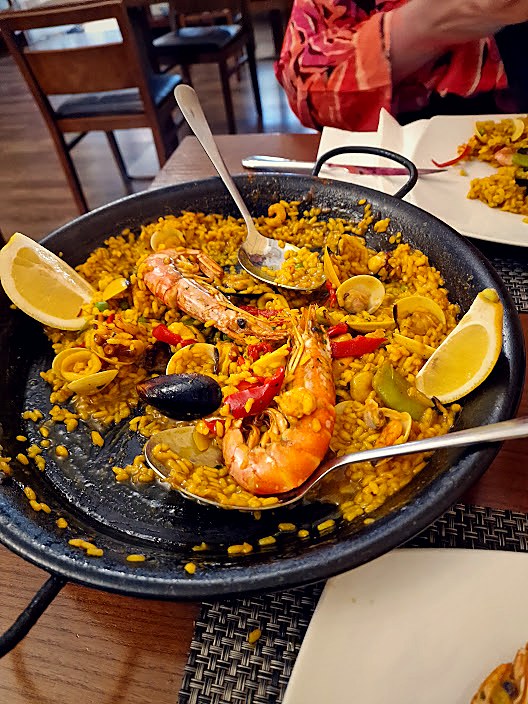
Mallorcan cuisine sits a little apart from mainland Spanish cooking. A short list of what you should try:
- Ensaïmada — the sweet spiral pastry. At Ca’n Joan de s’Aigo in Palma it’s baked every morning to a 17th-century recipe.
- Sobrasada — a soft, paprika-heavy cured-pork spread. You eat it on bread. Doesn’t taste like anything else.
- Tumbet — the Mallorcan answer to ratatouille. Layers of eggplant, zucchini, potato, peppers, tomato sauce. Often served with a poached egg on top.
- Pa amb oli — bread, olive oil, tomato, salt. Minimalist genius.
- Coca de trampó — a thin flat bread topped with pepper, onion and tomato, sold by the slice at markets.
- Frito mallorquín — liver and potatoes with vegetables, heavily spiced. Deeply traditional.
- Thick hot chocolate at Ca’n Joan de s’Aigo. A spoon will literally stand up in it. With an ensaïmada on the side it’s a full breakfast.
My one food hack
The best food is not on the main streets. If the menu is in six languages with pictures of the dishes — walk past. If the menu is only in Spanish or Catalan, the diners are locals, and you can smell garlic from the street — go in. That’s where the real Mallorca is.
The plane-spotting beach
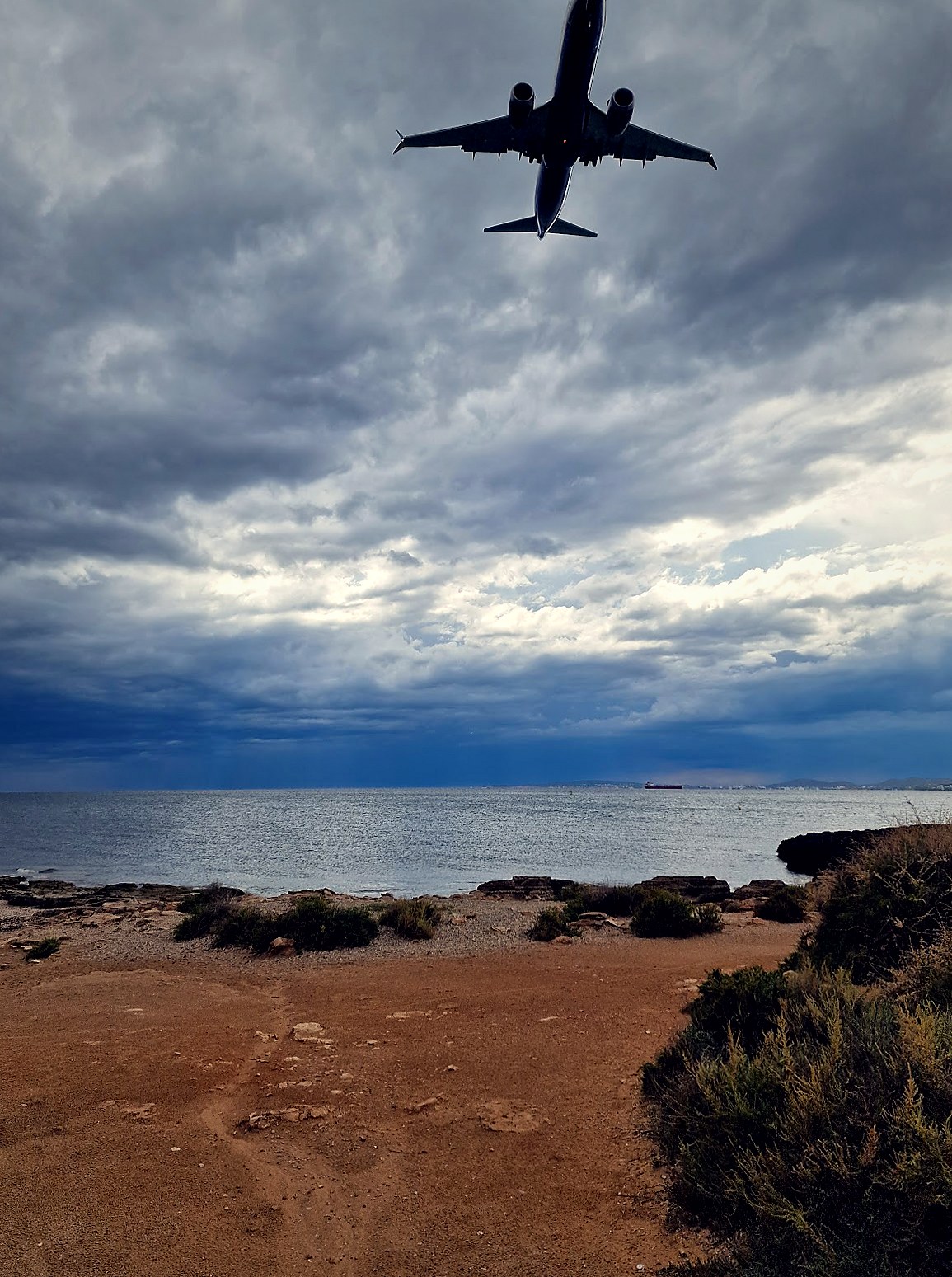
A small thing, but I loved it. The approach path for PMI — Palma de Mallorca Airport comes in directly over the coastline between Ca’n Pastilla and the runway. There’s a rocky cove about fifteen minutes on foot east of the village, where in high season a plane passes low overhead every ninety seconds or so.
A local couple brought sandwiches and a folding mat. Two kids shouted out airline names. I sat with my camera and worked through half a memory card before I realized the light was changing, the clouds were stacking up over the bay, and the whole scene had turned into something I’d remember much longer than any museum.
A sea you want to sit and stare at
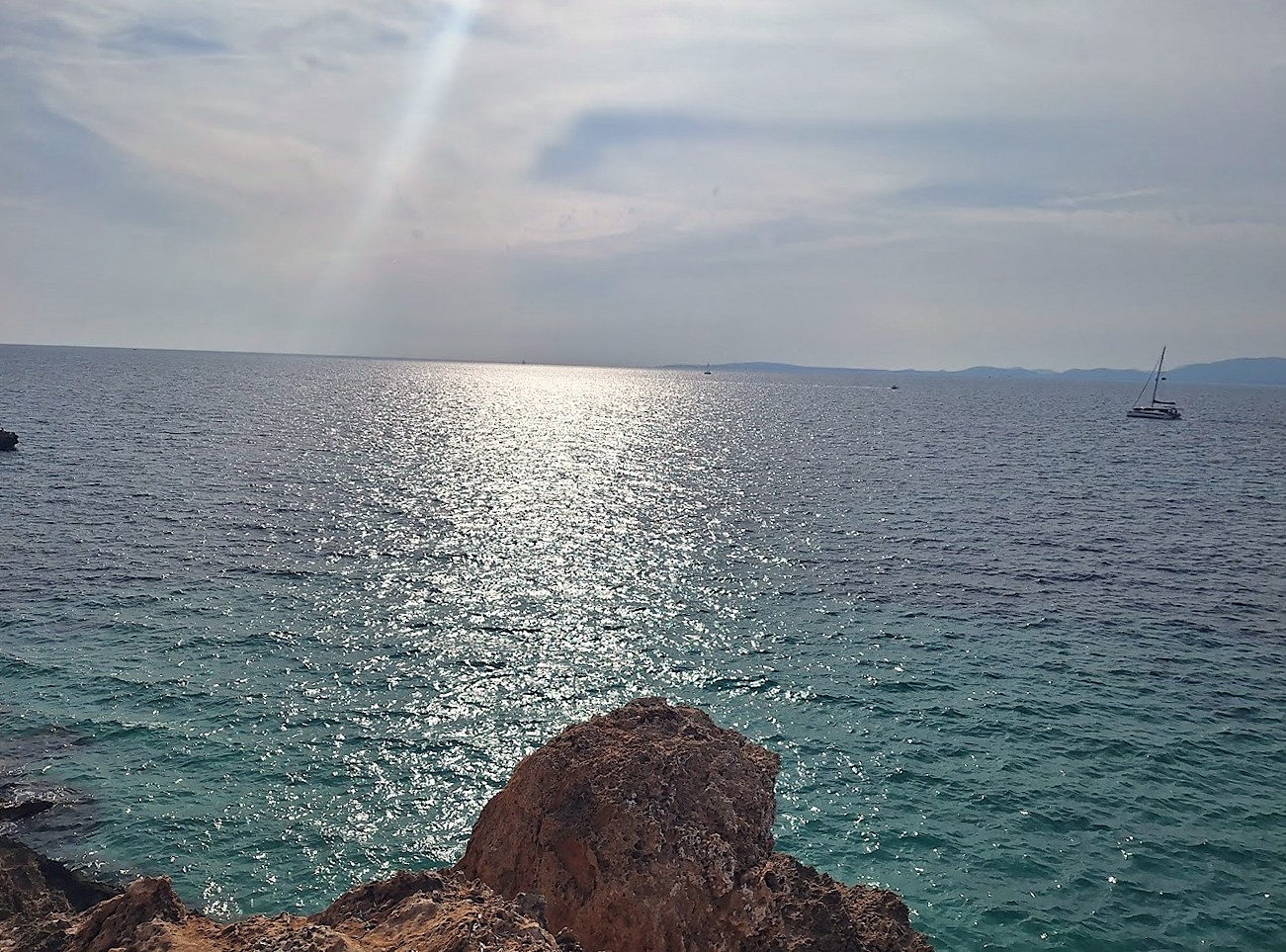
If you walk east from Ca’n Pastilla, past the last balneario, the sand ends and the coast goes rocky. Tiny coves appear, the water clarifies to a turquoise you don’t really believe exists until you see it, and the only sounds are the rope of a distant sailboat clanging against its mast and the wind on the junipers.
I spent an entire afternoon there with a bottle of water and a book I never opened. This is the part of slow travel no one Instagrams — because nothing is happening. And that’s exactly the point.
Sunset at Balneario territory
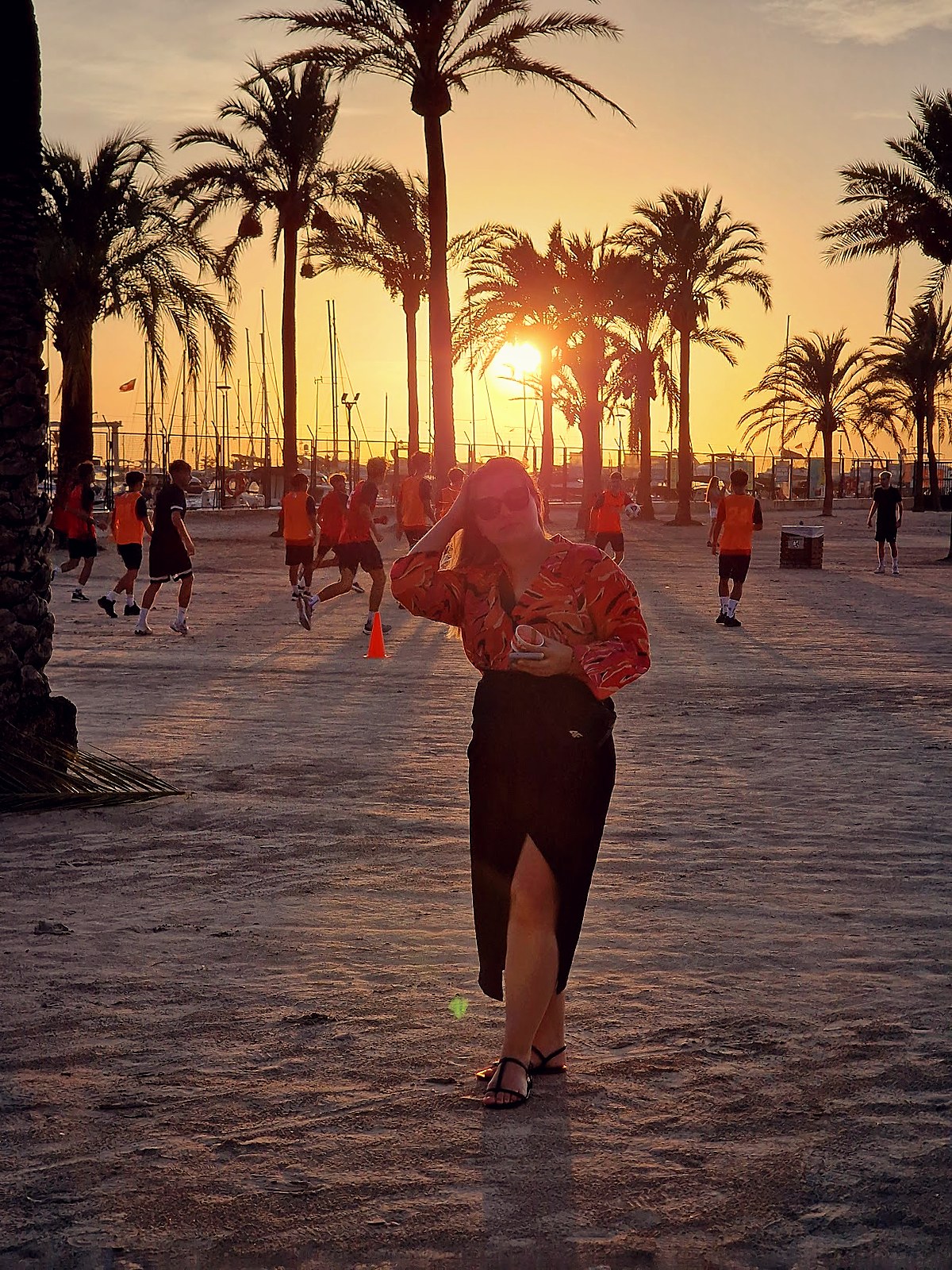
The best free show on Mallorca happens every evening around 7:45pm in September. The sun drops behind the Palma marina, the palms silhouette against an orange sky, a pickup football match starts up on the sand, somebody turns on Mediterranean chill music in a far-off balneario, and the whole beach quietly stops what it’s doing.
There’s no ticket, no queue, no photographer pointing at you. Just the island doing its job.
What I’d do differently next time
Every trip teaches you something. Here’s my “next time” list:
- Go to Es Trenc. The island’s most Caribbean-looking beach — two kilometers of white sand and turquoise water, on the south coast. I ran out of days.
- Rent a car for two or three days. To do the northwest properly: Deià, Valldemossa, Cap Formentor.
- Stay a night in the Tramuntana. Don’t come back the same evening. There are old stone fincas restored into small mountain hotels — the star-sky up there is nothing like Palma.
- Walk a segment of the GR-221 — the Dry Stone Route. An ancient trail across the Tramuntana. Even one day of it is another reality.
- Don’t go in August. May, June and September — no crowds, no +35°C afternoons.
Getting there: flights and transfers
Palma de Mallorca Airport (PMI) is one of the busiest airports in Spain. In the summer it handles up to 900 flights a day.
- From Vienna (VIE). Direct flights with Austrian, Eurowings, Wizz Air. €80–€200 round trip if you book ahead.
- From Bratislava (BTS). No direct flights — connect via Vienna or Warsaw.
- Season. April to October is the live season. Most hotels close in winter, but the city itself keeps running, and the island is beautiful in its off-season stillness.
- From the airport.
- Bus A1 to central Palma — €5, 25 minutes.
- Bus A2 to Ca’n Pastilla and S’Arenal — €5, 10 minutes.
- Taxi — €25–€35 depending on your drop-off.
One tip: fly in the morning. By midday PMI is overloaded and the security queues can run 40 minutes deep.
Your first step
The longer I travel, the more I’m sure: big journeys don’t start with plans. They start with decisions. Not “I’ll go when I have more time” or “when I’ve saved enough.” Just: I’m buying the ticket. I’m going.
Mallorca reminded me why I started traveling in the first place. Not for the Instagram grid — for the wooden carriage shaking through a tunnel in the Tramuntana. For the old man handing me a warm ensaïmada in a paper bag. For Balneario 6 at sunset, when the DJ finally lets the music go quiet and everyone on the sand falls silent with it.
You don’t need two weeks of vacation. You don’t need Spanish. You don’t need to be a “real” traveler. You just need to take the first small step — open an airline website, book a hotel for three nights, block the dates in your calendar.
The rest sorts itself out.
ROOTAWAY — Small steps to long journey.
We built this brand for the people who keep telling themselves: “first I’ll finish the project, then I’ll save up, then the weather will be better, then…”
Then never arrives.
Look at flights for next week. Find one place on the map you’ve always wanted to see. Book a hotel for two nights.
The rest — happens on its own.
Share this post