
Budapest in Spring and Summer: Two Souls of One City
Small steps to long journey. The best cities don’t open up the first time. And not in a single season.
Budapest is a city with two characters. One is spring — quiet, almost melancholic. The other is summer — loud, slightly mad, with rooftop parties that don’t end until five in the morning.
I went both times. And I want to tell the truth — they are two different trips, even if the address on the Flixbus ticket is exactly the same.
When I saw Budapest for the first time: April
I arrived in Budapest in mid-April. I picked the date by accident — a long weekend, a bus from Bratislava for €18, and I thought “why not”.
It turned out to be the perfect time.
What spring gives you
The whole city is in bloom. Magnolia, cherry blossom, forsythia. Margit Island — that little green park in the middle of the Danube — turns into an explosion of color in April. The Japanese Garden on the island has a few dozen sakura trees that all flower at once. No crowds. You just sit on a bench, look, breathe.
15–22°C. Perfect for walking. You can clock 15 km a day and not feel it.
Prices lower than in summer. Hotels in the center start at €60 a night (vs. €120+ in August). Ruin bars aren’t full, you can pick a table. Restaurants take same-day bookings.
The thermal baths are pure gold. Széchenyi, Gellért, Rudas — all open, but without the summer crowd. You can spend three hours in the pool, take a massage, grab a Fanta from the machine and go back in. A spa day for the price of a Pilsen — entry from 8,000 forints (€20).
Cultural life is at full tilt. Budapest Spring Festival (April) — two and a half weeks of classical music, opera, ballet and jazz across the city. Some concerts are free.
The moments that stayed with me
I sat on a bench on Margit Island at 5pm in April. Low sun, warm but not hot yet. Hungarian families on the grass with strollers and picnics. Somebody on an acoustic guitar playing something sad. A jogger nodded as he passed.
I walked across the Lánchíd (Chain Bridge) at sunrise. Mist over the Danube. Tram 2 rolling along the river. The Buda Castle on the hill in a soft fog, like a Japanese woodblock print.
I had hot chocolate at Gerbeaud (legendary 1858 patisserie) with a slice of Eszterházy torte. It was raining outside, I sat by the window and watched people running across Vörösmarty tér with umbrellas.
This was the intellectual Budapest. Slow. Unhurried. A city where you can sit in a café for two hours with a single cup.
When I came back: August
I returned a year later in August. I thought: “well, what’s new, I already know this city”.
I did not recognize it.
What summer gives you
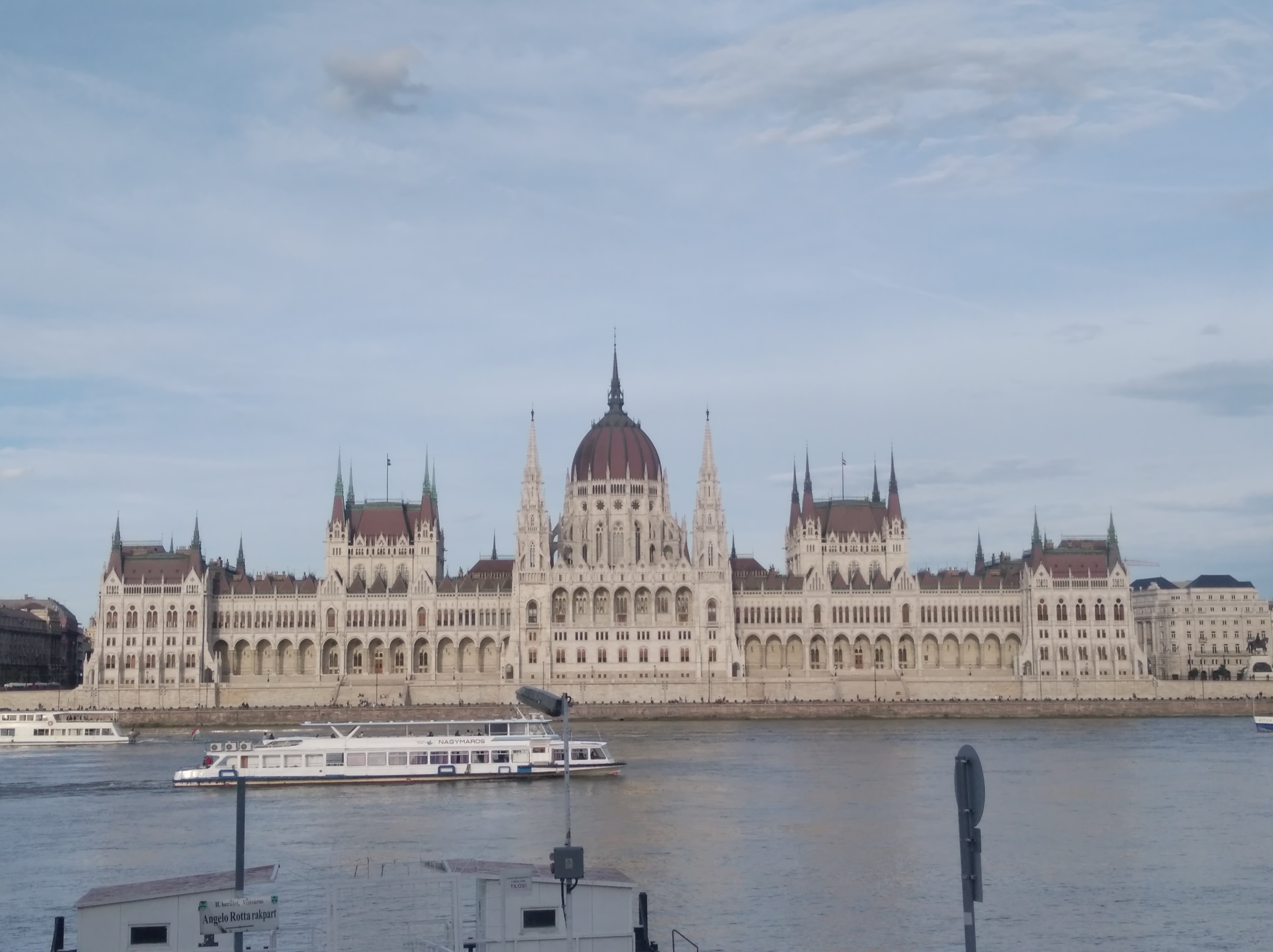
Dinner at 10pm. It’s 28°C. The Danube glows orange at sunset. All of Buda is on the riverside terraces. You sit, order a glass of Tokaji, look at the lit Parliament and realize this is one of the most beautiful cities in Europe.
Ruin bars at peak form. Szimpla Kert, Instant-Fogas, Mazel Tov — all running until 4–5am. Rooftop DJ sets. In the courtyards: cigarettes, wine, conversations with strangers from Argentina, Australia, South Korea. The Budapest you’ve seen on Instagram.
Sziget Festival (early August). One of Europe’s biggest music festivals. 400,000 people, 1,000 acts, every headliner you’d ever want, six days. If that’s your thing, summer is for you.
Open-air thermal pools. At Széchenyi the outdoor pools stay open until 10pm in summer. You’re in 36°C thermal water, neon lights around, summer steam rising, a Viennese waltz playing from the speakers. A picture you don’t forget.
Danube cruises. Evening dinner cruises — €40–60. You drift past a lit Parliament, Castle Hill, Matthias Church, Gellért Hill. The city from the water is a different city.
The downsides of summer
Hot. Seriously hot. August is 30–35°C. The city is asphalt, stone, concrete. Old buildings have no AC. The metro is hot and humid. You’ll drink three liters of water a day.
Crowds. Thermal baths at noon aren’t a rest, they’re human Tetris. Ruin bars on a Friday at 11pm — 30 minutes of queue.
Prices roughly double. A hotel that was €65 in April runs €130+ in August. Lunch with a river view — €40+ per person. Airport taxi — up to €35 (vs. €22 in low season).
Budapest is multinational — and I loved that openness
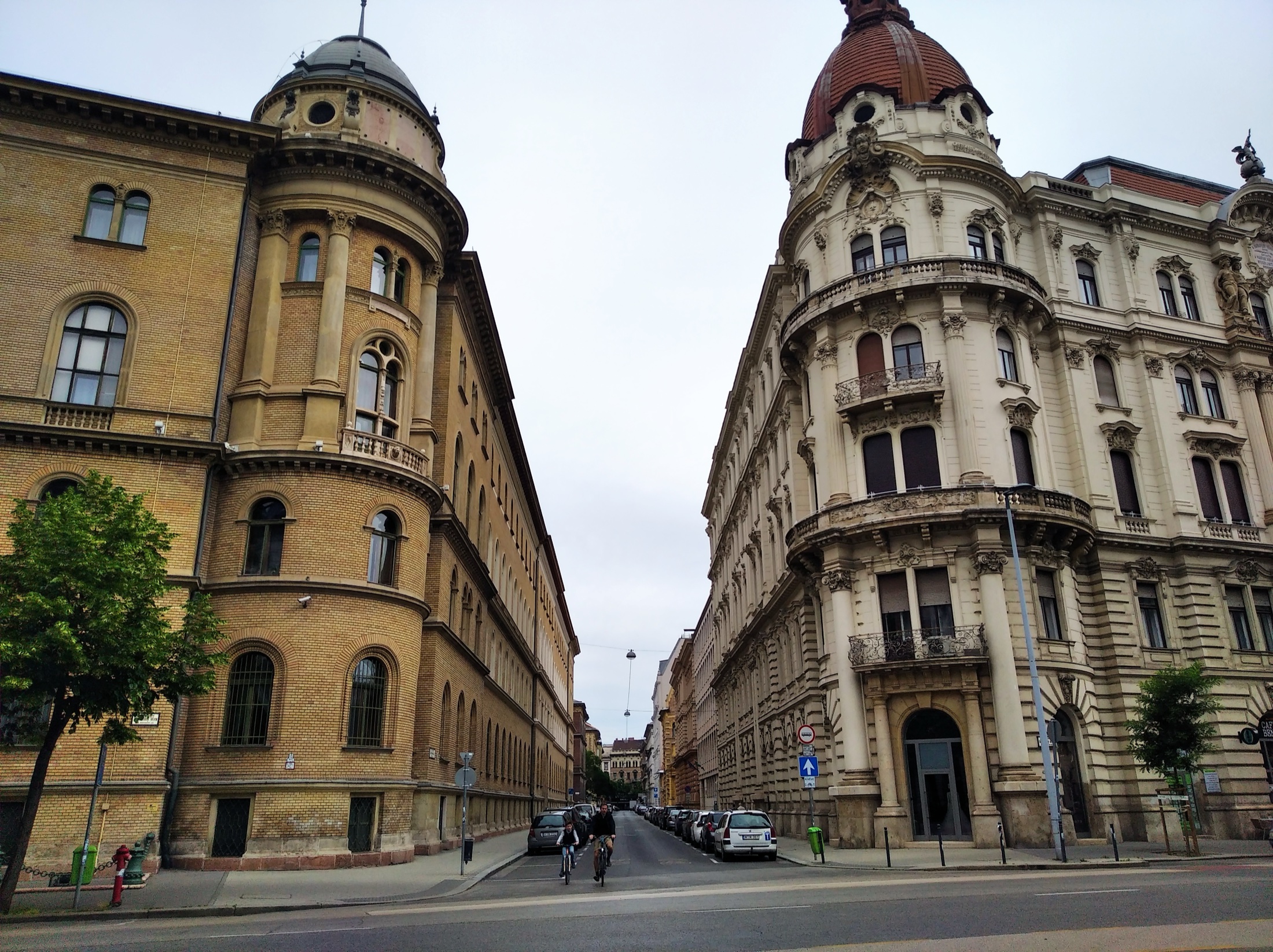
One of the things that hit me on the second day was how multinational Budapest is. On a single café terrace I heard Hungarian, English, German, French, Spanish, Hebrew, Korean, Russian, Ukrainian. Not the Disneyland kind of multilingualism, where everyone is a tourist on the same itinerary — the working kind. People living here, working here, raising kids here, mixing into the city.
I loved that openness. Nobody asks where you’re from before deciding whether to be friendly. The waiter in the bakery, the guy in the metro who pointed me toward Nyugati station, the woman in the spa who gestured toward a free locker — none of them flinched at my bad pronunciation. They just helped.
Coming from a part of Europe where neighborhoods can feel a little closed and a little quiet, I noticed it immediately. Budapest is a city that lets you in.
The embankment — the heart of Budapest
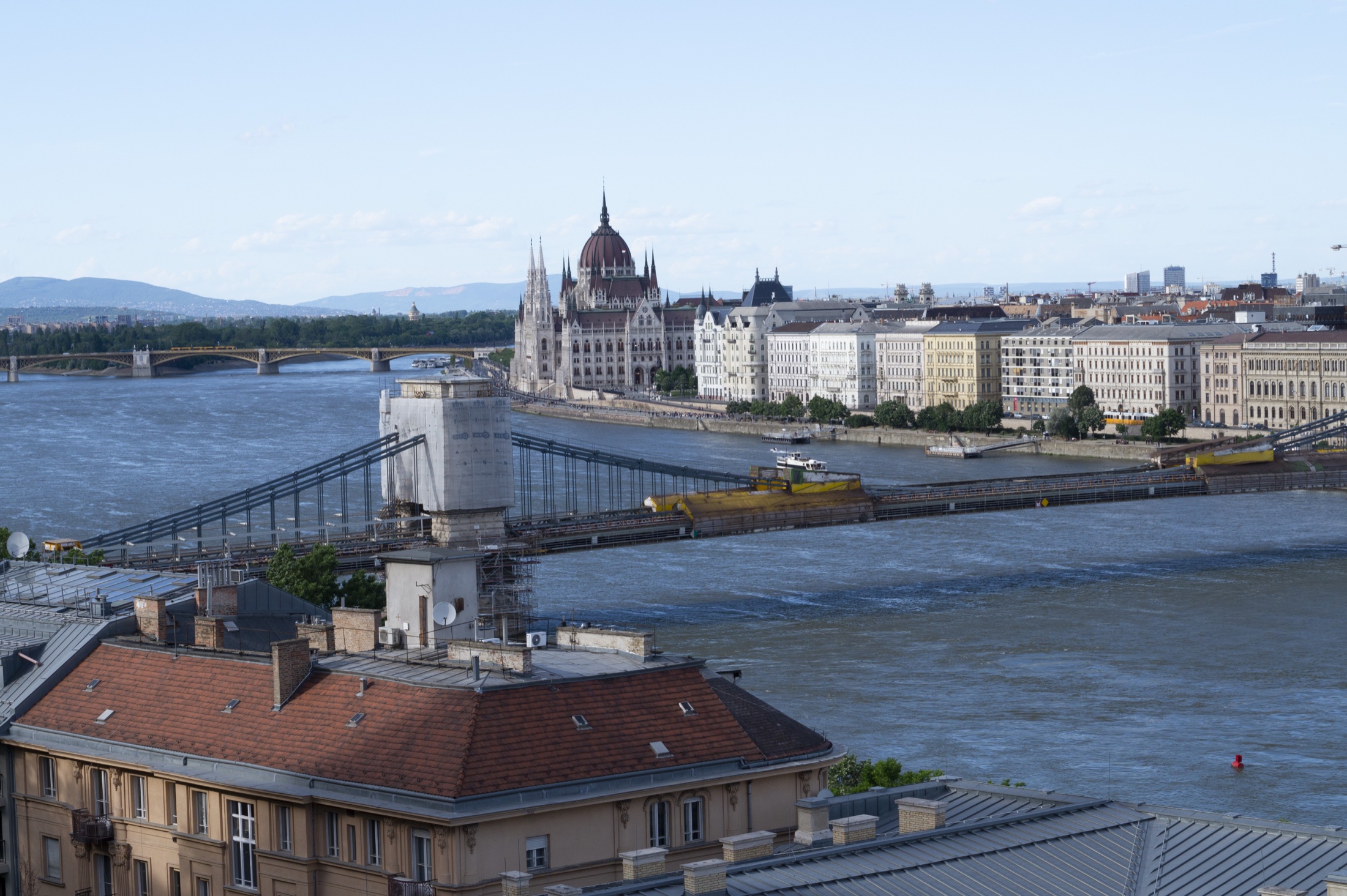
If you ask me what I remember most strongly from Budapest, it isn’t a museum or a bath or a bar. It’s the embankment.
The Danube cuts the city in two — Buda on one side (hilly, green, quiet, historic) and Pest on the other (flat, lively, commercial, full of restaurants). Two different personalities of the same person. And the embankment is where they meet.
I walked it morning, noon, and night. From the Chain Bridge to the Parliament. From the Parliament past the Shoes memorial to Margaret Bridge. From Margaret Bridge to Elizabeth Bridge and back. Each time the river looks different. Each time the light is different. Each time I noticed a small detail I had missed before — a plaque on a wall, a bronze figurine on a railing, a man playing accordion at the foot of a staircase.
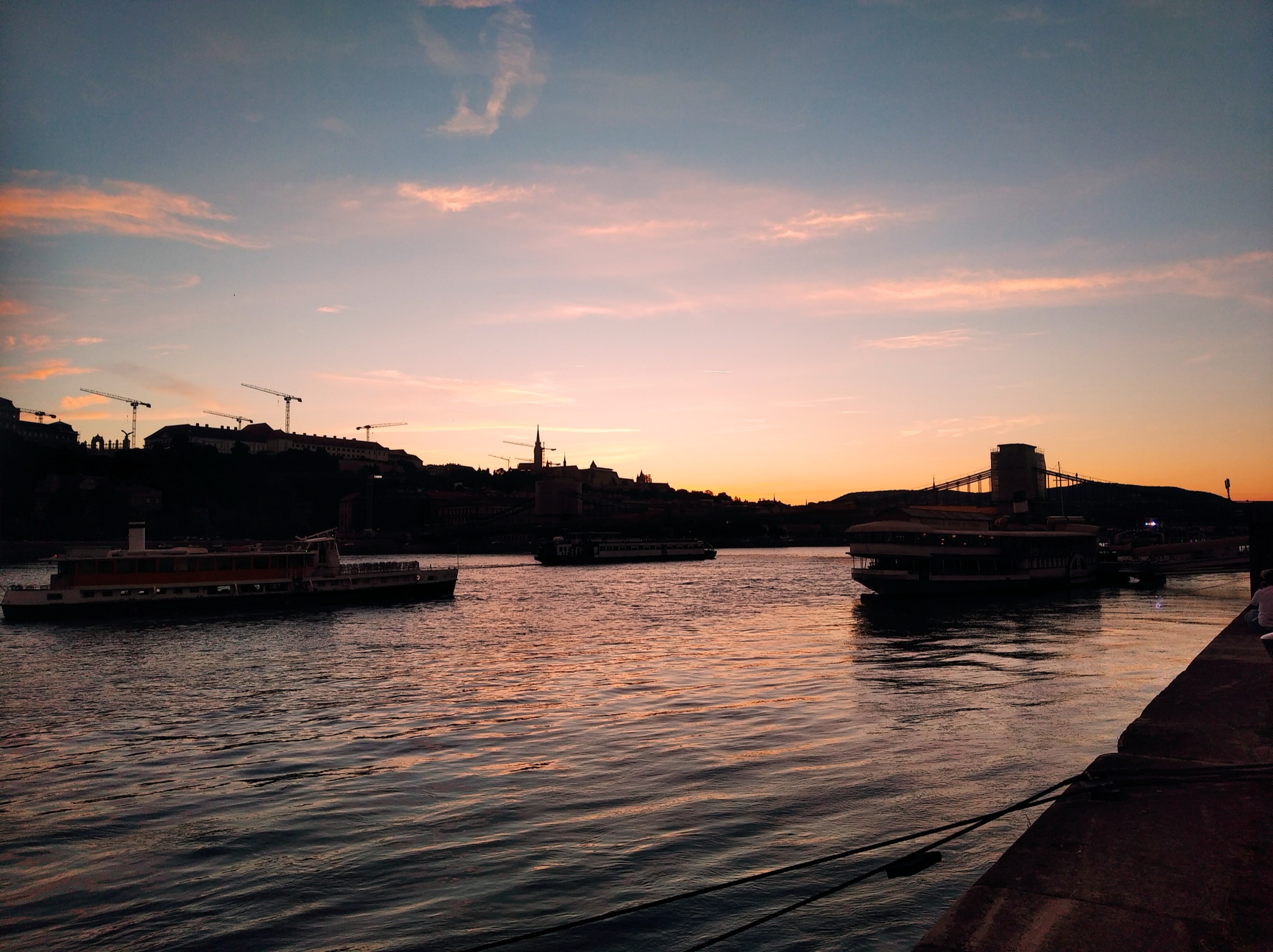
This is the thing I would tell anyone going to Budapest: don’t try to see everything. Walk the embankment instead. At sunrise, at golden hour, at midnight. The city explains itself there.
The simplest breakfast that stayed with me forever
I want to say this honestly because no guidebook will: the most amazing breakfast of my life in Budapest cost me roughly €1.50.
It wasn’t at Gerbeaud. It wasn’t at Centrál. It wasn’t a café at all.
It was a plain bun from the supermarket and a bottle of cold tea, eaten on a stone step on the embankment at 7:30 in the morning, watching the Danube wake up.
The sun was just hitting the dome of the Parliament across the river. A river tram was repositioning for the morning route. Two old men with fishing rods were already in their spot. The city was quiet — not the empty quiet of small towns, but the held-breath quiet of a big city before it starts moving.
I tore the bun in half. The cold tea was sweeter than I expected. And for some reason — maybe because I was alone, maybe because I’d given up planning the day — I felt something I don’t usually let myself feel on trips: that I had nowhere to be.
I’ve had €60 brunches in Vienna and Paris that didn’t come close.
The small memorials — and the ones that broke me
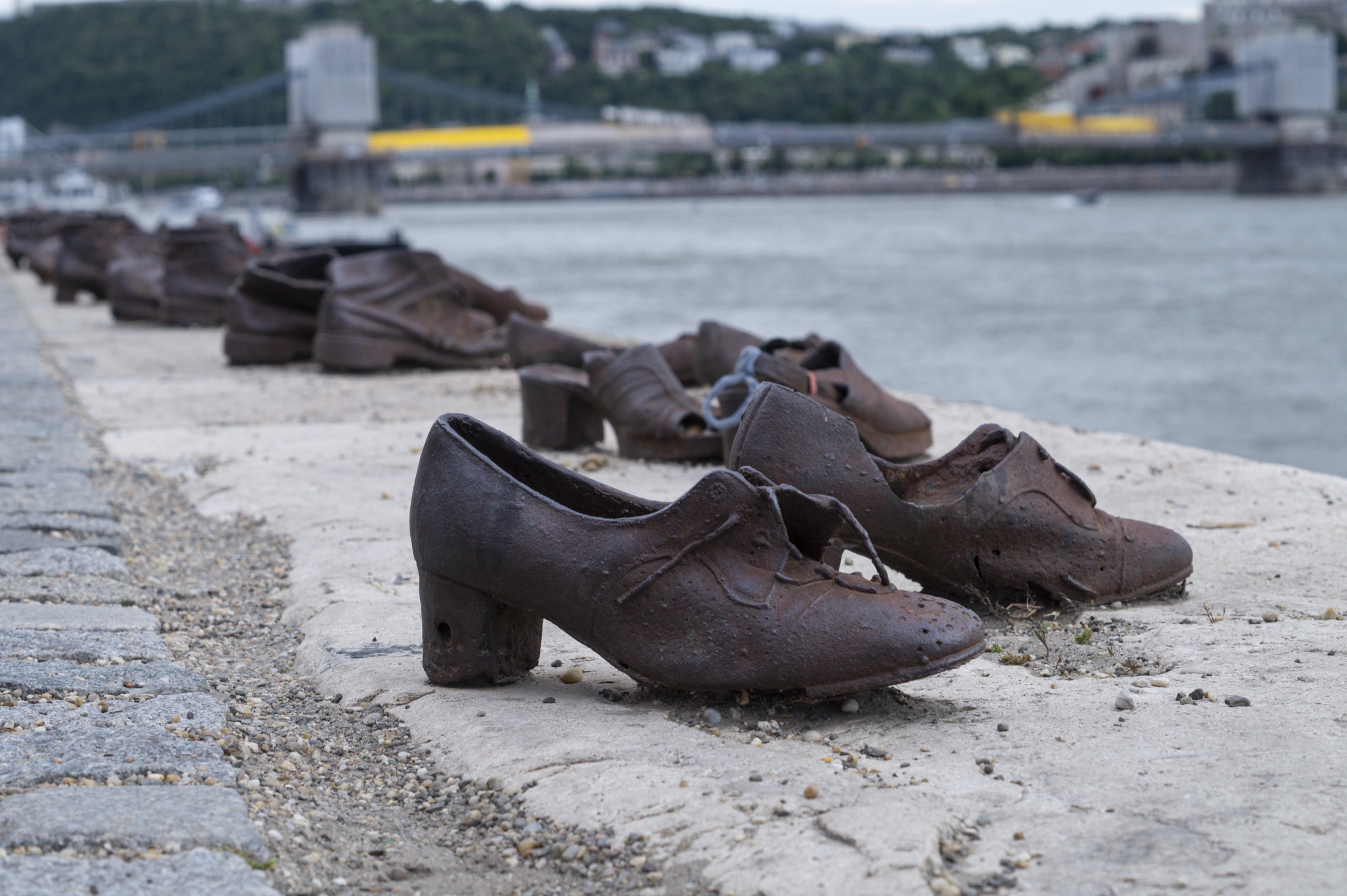
What I wasn’t ready for is how much history is whispered into the city. Not just in the big museums. On almost every corner there’s a small plaque, a brass cobblestone in the pavement, a name on a wall, a date that doesn’t let you walk past.
At first I tried to read all of them. By day two I gave up — there are too many. So I just slowed down and let them register.
Two of them broke me.
The first is the memorial to murdered Jewish children in the small park near the Dohány Synagogue — photographs of children’s faces, ordinary school photos, smiles, ribbons in hair. Most of them never got past the age I was when I first traveled abroad alone.
The second is the Shoes on the Danube Bank — sixty pairs of cast-iron period shoes lined up along the embankment exactly where, in the winter of 1944–1945, Arrow Cross militiamen ordered Jews to remove their shoes (shoes were valuable) and shot them straight into the freezing river. Men’s work boots. Children’s lace-ups. A pair of women’s heels.
I stood there for a long time. Longer than I planned. My family on both sides has carried what genocide and war do to people — not as history, as something passed down. So I didn’t take a picture of the shoes the way most visitors do, smiling beside them. I just sat on the stone curb and let the river move past.
If you go to Budapest, go to Shoes on the Danube quietly. Go to Dohány Synagogue (the largest synagogue in Europe, second in the world after New York). Go to House of Terror if you can take it. And if you have a free afternoon, take the bus out to Memento Park — the surreal “graveyard” of communist statues collected from across the city after 1989.
These are not extras to a city break. They are part of the city.
Buda Castle, Matthias Church, Fisherman’s Bastion
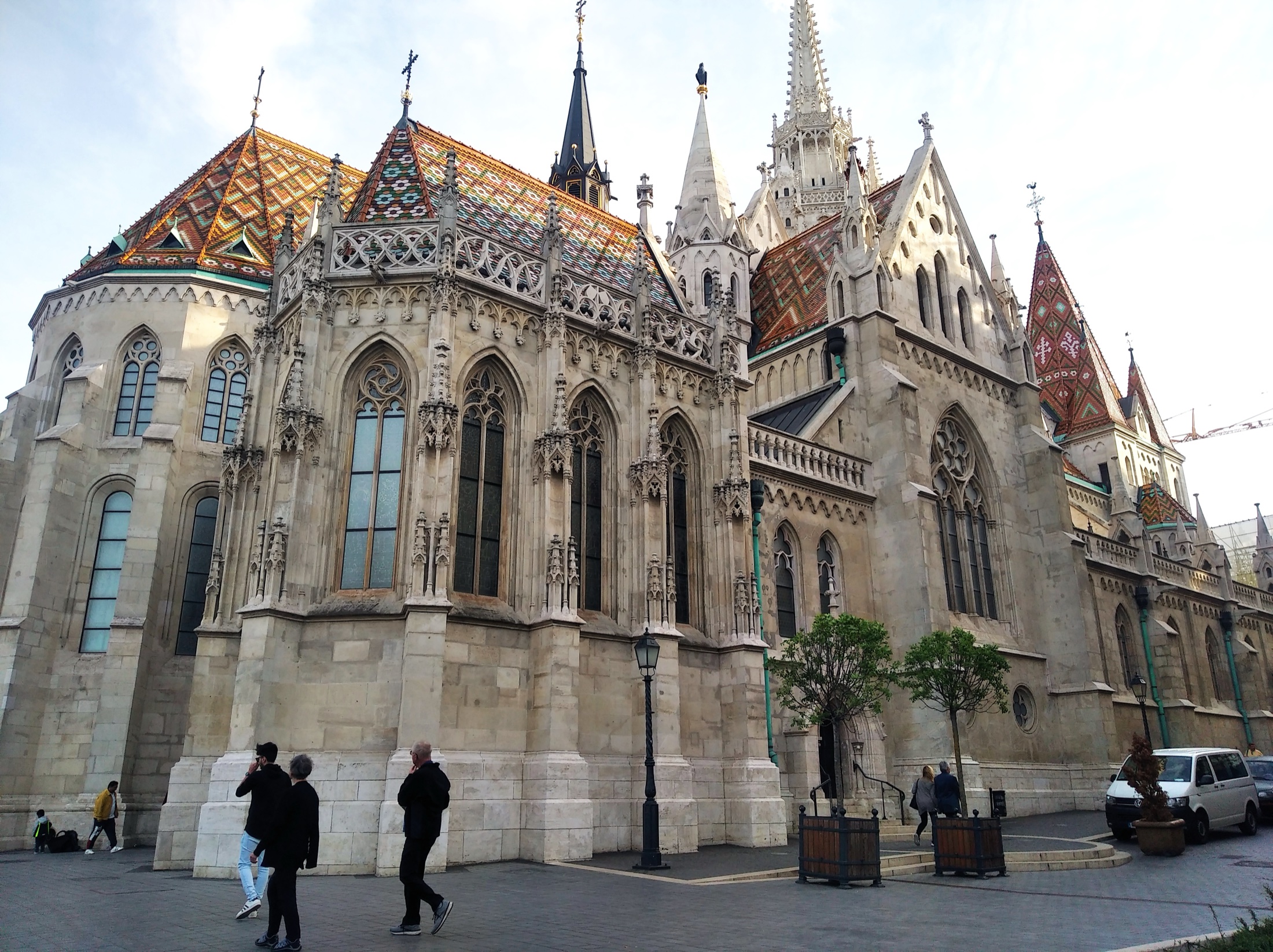
Climb to Castle Hill by the funicular or, better, on foot up the side stairs. The view from the top is the most photographed in Hungary, and it earns it.
Matthias Church is a gothic basilica with one of the strangest, most beautiful roofs in Europe — patterned in colored Zsolnay porcelain tiles. Inside: golden frescoes, dark wood, the kind of cool stone air old churches keep even in August.
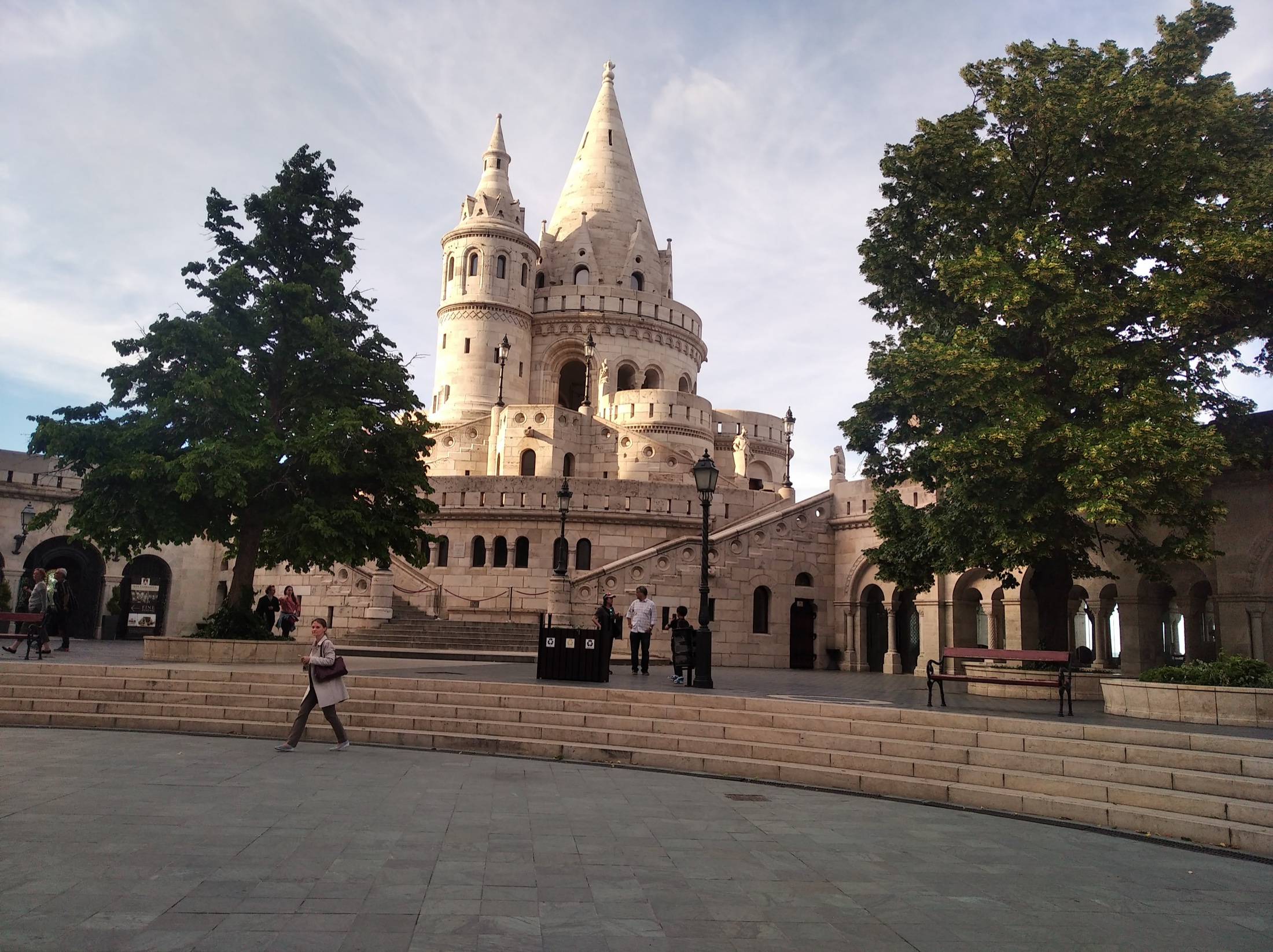
Right next to it: Fisherman’s Bastion, the seven white towers built for the 1896 Millennium celebrations. Walking around the lower terraces is free. The upper viewing platforms cost a small fee, and at sunset they are worth it. From up there, the Pest skyline across the river is the postcard.
Bridges, big and small
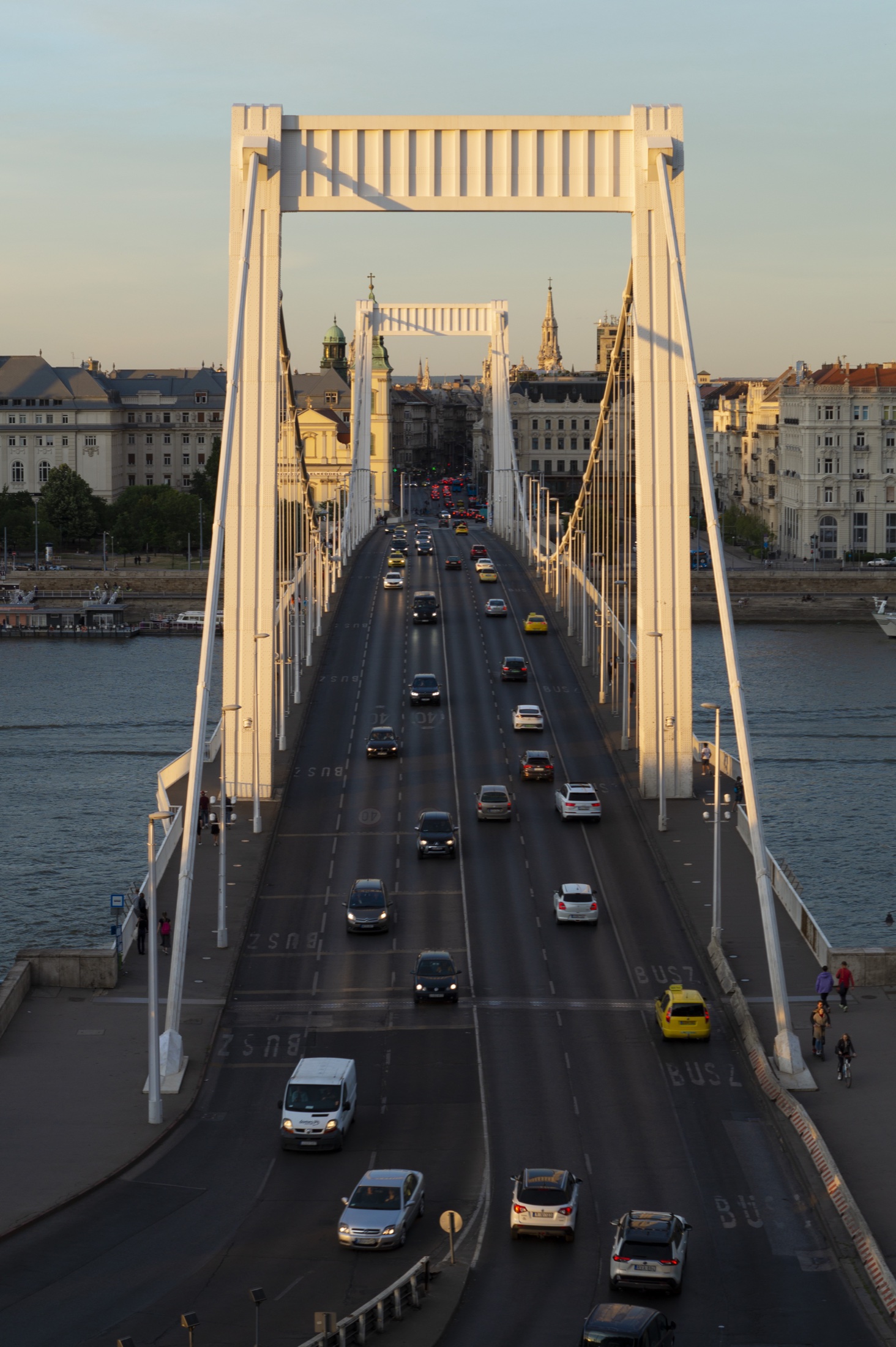
Budapest has nine bridges over the Danube and at least four you should walk:
- Lánchíd (Chain Bridge) — the oldest, 1849. Lit at night.
- Erzsébet híd (Elizabeth Bridge) — modern, white, slim, named for the murdered Empress.
- Szabadság híd (Liberty Bridge) — green, lacework iron, often closed to cars in summer for picnics on the bridge itself.
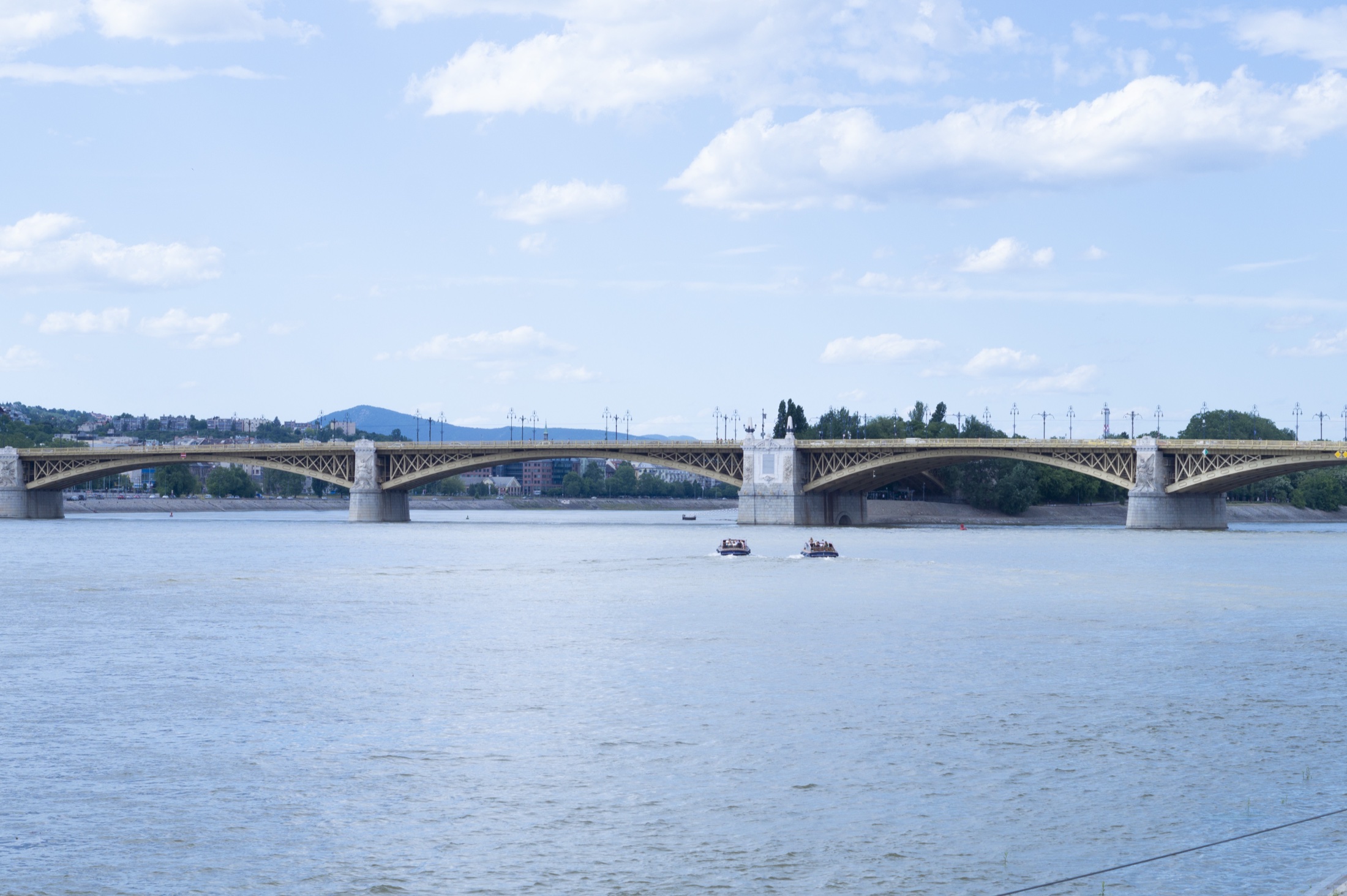
- Margit híd (Margaret Bridge) — angular, with a built-in spur to Margit Island.
Crossing on foot is the right way. You see how the city was put together.
Parliament: don’t just look from outside
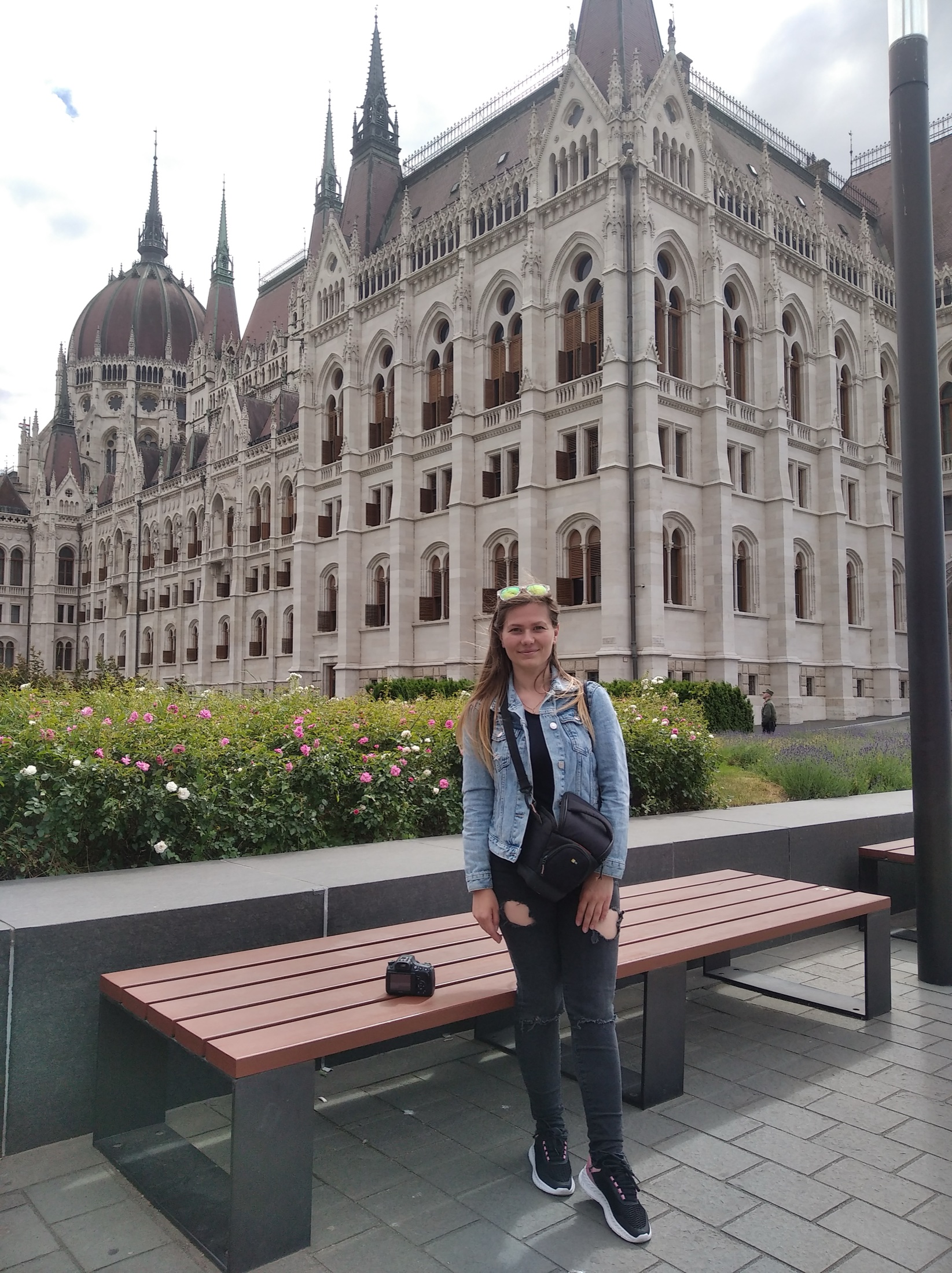
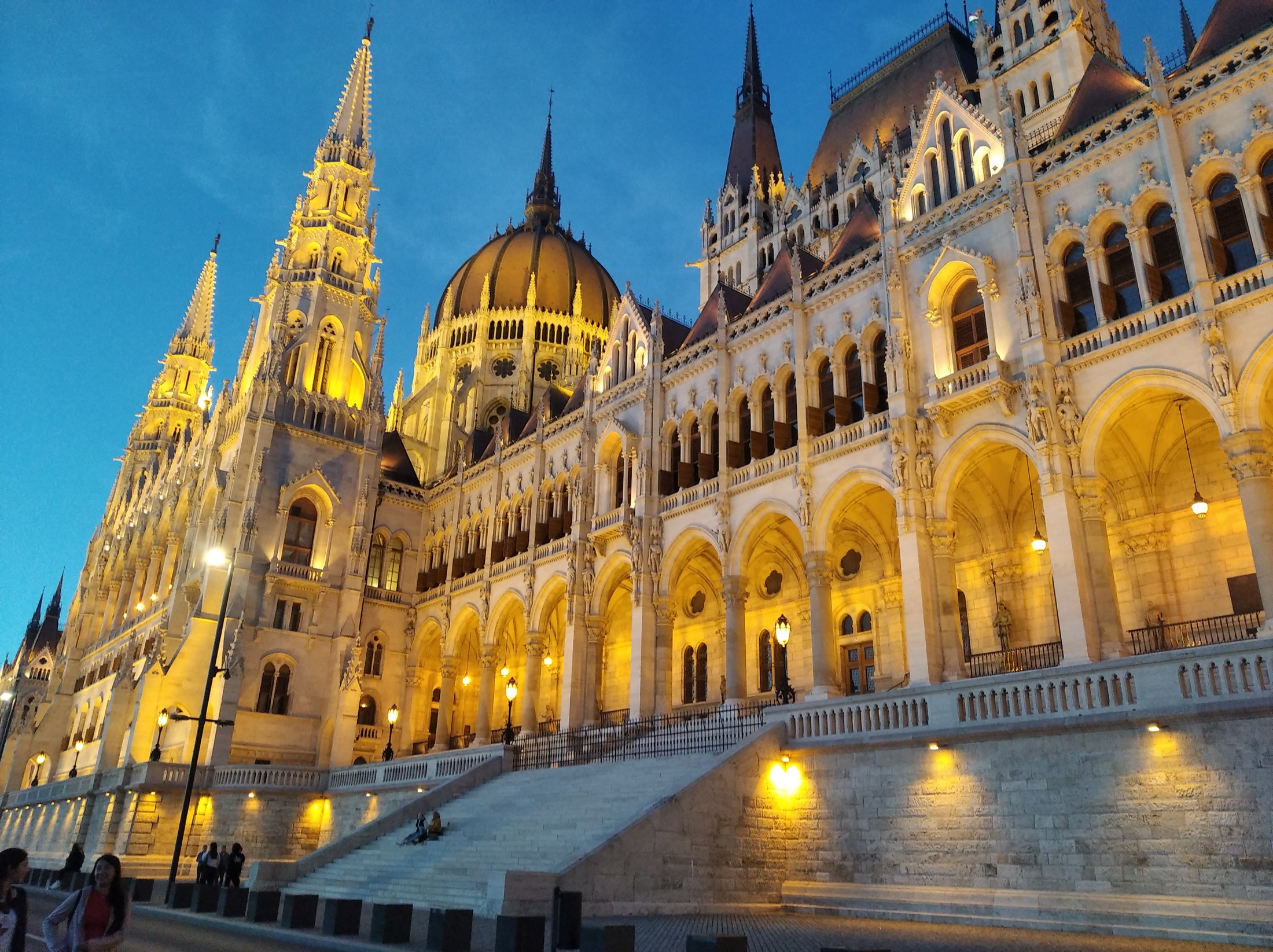
The Parliament building is one of the most beautiful in Europe. Built in 1904, neo-gothic, 268 meters long, 691 rooms. From the outside it’s free; the interior is by guided tour only. Book online in advance — the on-the-day queue is brutal in summer.
At night, lit warm gold against the black river, it doesn’t look real.
Saint Stephen’s Basilica
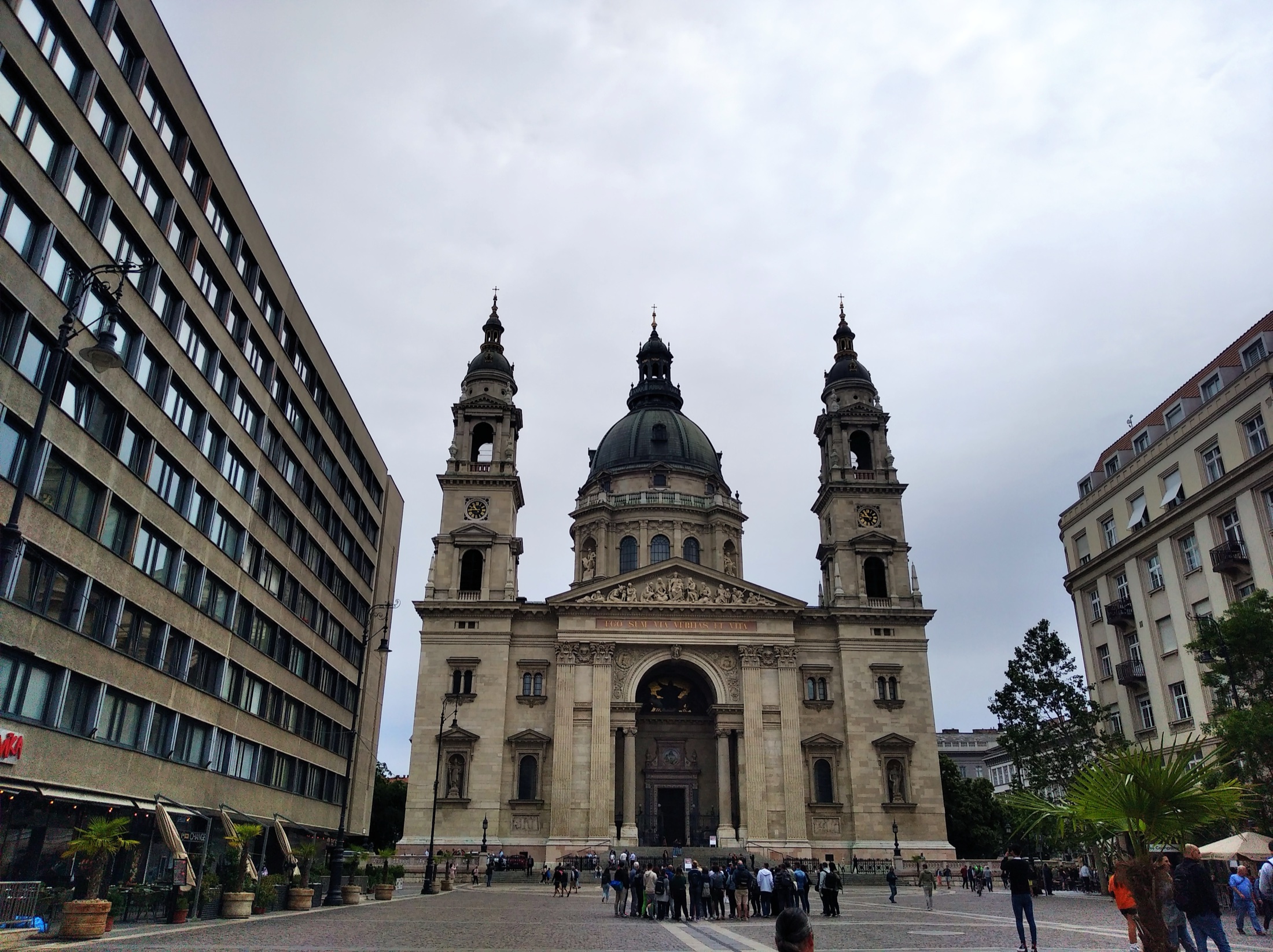
In the center of Pest stands St Stephen’s Basilica — neoclassical, finished in 1905, exactly 96 meters tall. By Hungarian tradition, no building in Budapest may exceed this height. (The Parliament is also 96 m — symbol of equal weight between church and state.)
Climb the dome. The 360° terrace is one of the cheapest panoramic views in central Europe, and it has the advantage of being inside Pest, not on Castle Hill.
In the evenings the square in front sometimes hosts free open-air classical concerts. Worth a check.
Ratings: where to spend your time
All ratings are mine, honest, after two trips (April and August). From 1 (skip it) to 10 (Budapest isn’t Budapest without it).
🌉 The Danube embankment — 10/10
Not a sight, a ritual. Chain Bridge to Parliament to the Shoes to Margaret Bridge, at sunrise, golden hour and midnight. If you do one thing in Budapest, walk this. The city explains itself here.
🕯 Shoes on the Danube + the memorials — 10/10
The sixty cast-iron pairs where Arrow Cross militiamen shot Jews into the river in 1944–45. Add the Dohány Synagogue (largest in Europe) and, if you can take it, the House of Terror and Memento Park. Not extras to a city break — part of the city. Go quietly.
♨️ Széchenyi thermal baths — 9/10
A spa day for the price of a Pilsner (from ~8,000 HUF / €20). Spring 9, summer a mixed bag — outdoor pools open until 10pm by neon in August, but midday is human Tetris. Go early or late.
🏰 Castle Hill: Matthias Church + Fisherman’s Bastion — 9/10
The most photographed view in Hungary, and it earns it. Zsolnay-tiled roof, seven white neo-Romanesque towers. Lower terraces free; upper platforms a small fee, worth it at sunset.
🏛 Parliament — 9/10
Neo-gothic, 268 m, 691 rooms — one of the most beautiful buildings in Europe, and unreal lit gold at night. Free from outside; the interior is guided-tour only. Book online — the summer queue is brutal.
⛪ St Stephen’s Basilica dome — 8/10
One of the cheapest panoramic terraces in central Europe, with the advantage of being inside Pest rather than up on Castle Hill. Free open-air concerts on the square some evenings.
🍸 Ruin bars (Szimpla Kert) — 8/10
The city’s defining nightlife, born in the abandoned Jewish Quarter in 2002. Summer 10, spring 6 — in April you get a table and quiet; in August it’s rooftop DJ sets until 5am and a 30-minute Friday queue.
🌳 Margit Island — 8/10
The green park in the middle of the Danube. Spring 9 for the sakura in the Japanese Garden (late April, no crowds); summer, cycle it at dusk.
🚢 Danube evening cruise — 7/10
€40–60 to drift past a lit Parliament, Castle Hill and Gellért Hill. The city from the water is a different city — a nice-to-have, not a must.
What you can only do in spring
- See cherry blossoms in the Japanese Garden on Margit Island (late April).
- Walk through City Park without sweating.
- Long lunches on restaurant terraces without melting.
- Spring Festival classical music in historic halls.
- The morning mist on the Danube.
- Sit in Gerbeaud / Művész / Centrál with a hot chocolate while it rains.
What you can only do in summer
- Sit in a rooftop ruin bar at 4am, with the air still 22°C.
- See Sziget Festival.
- Cocktails on a Danube boat at sunset.
- Széchenyi by neon in the evening.
- Cycle around Margit Island at dusk.
- Eat kürtőskalács (chimney cake) on the street, fresh off the spit.
Hungarian food, by season
Spring
- Medvehagyma (bear’s garlic) — in everything: soups, gnocchi, sauces. Seasonal delicacy.
- Spárga (Hungarian-style asparagus) — a May favorite, in Hollandaise.
- Gulyás in clay pots — the classic, perfect for cool weather.
- Pörkölt — the heavier cousin of goulash, served with nokedli (small egg dumplings).
- Hot chocolate at Gerbeaud, Művész, Centrál — a spring ritual.
Summer
- Hideg meggyleves (cold cherry soup) — a summer classic, served as the first course. Strange and wonderful.
- Lángos — deep-fried dough with sour cream, cheese, garlic. Ultimate street food.
- Fagylalt — Hungarian gelato. Gelarto Rosa by the Basilica scoops it as a flower on the cone.
- Fröccs — Hungarian wine spritzer, the summer drink number one.
- Tokaji Szamorodni, chilled — perfect against the heat.
Things that surprised me
- It’s cheaper than it looks, even in August. You can have lunch for €8–10. Those prices have vanished from Bratislava, Vienna and Prague.
- Hungarian language is a wonder. It’s not related to anything you know. The biggest language barrier in Central Europe. Learn “szia” (hi) and “köszönöm” (thank you) — even badly. It opens doors.
- The city is split by the Danube. Buda and Pest are two different personalities.
- Ruin bars are a phenomenon. In 2002 someone started throwing parties in abandoned buildings of the old Jewish Quarter (District VII). Twenty years later it’s the city’s defining nightlife. Szimpla Kert — the first one — is still the king.
- Hungarians are polite. Intellectual. Formal. Not loud like Italians, not cool like Germans. Somewhere quiet in between.
Getting there
From Bratislava:
- Flixbus — 2.5–3 hours, from €10. Cheapest.
- RailJet train — 2.5 hours, from €15.
- Car — 200 km, 2 hours on the M1.
From Vienna:
- RailJet — 2.5 hours, from €20. Eight trains a day.
- Flixbus — 3 hours, from €8.
Airport (BUD):
- 100E Airport Express bus — 2,200 HUF (~€6), 40 minutes to the center.
- Taxi — €22–28 to the center.
Tip: buy a BudapestGO 24-hour pass — 1,600 HUF (~€4). All buses, trams, metro and HÉV trains. Painless transport.
A suggested route
If you have 3 days
- Day 1: Arrive, walk the city center, Parliament from outside, Fisherman’s Bastion at sunset.
- Day 2: Széchenyi thermal bath in the morning, walk through City Park, evening Danube cruise.
- Day 3: Buda Castle, then either Memento Park or Dohány Synagogue, ruin bar at night.
If you have 5 days
Add a day trip to Szentendre (30 minutes by HÉV train) — a small art-town on the Danube. Or to Eger or Tokaj for wine.
My recommendation: go twice
If you want to see Budapest properly — go once in spring and once in summer. A year apart, five years apart, doesn’t matter.
In spring you’ll find a city for poets and intellectuals. In summer, a city for parties and life on the street. You’ll understand why it’s one of Europe’s most-loved capitals.
It’s like reading a book and then watching the film. Same story, different accents.
Your first step
Budapest is a gift from Central Europe. Close, cheap, beautiful, full of culture, with thermal baths the Romans were already using.
Don’t wait until you’ve saved for Tokyo. Until work calms down. Until the “perfect moment”.
The perfect moment is the morning of next Saturday. Buy a Flixbus ticket today for €15. Book a hotel for €60. Be there at 10am with a coffee from Nyugati pályaudvar.
This is not a big trip. This is a small step. But these are the steps that grow into the list of cities you’ve actually been to.
And one day you’ll look back and realize — you took the trip you’d been dreaming of. Not in one go. In a lot of small steps.
ISMO LADJO — small steps, long journey.
Budapest is the city worth visiting twice. Spring for the coffee at Gerbeaud. Summer for the cocktails on Szimpla rooftops.
Open Flixbus. Look at the dates two weeks out. Pick a Saturday.
Your trip starts with one click.
Share this post
Some links on this page are affiliate links — I may earn a small commission at no extra cost to you.
Unforgettable experiences await in hungary
Local guides, skip-the-line tickets, and unique adventures you won't find on your own.