
Tayrona National Park
Parque Nacional Natural Tayrona, Santa Marta, Magdalena, Colombia
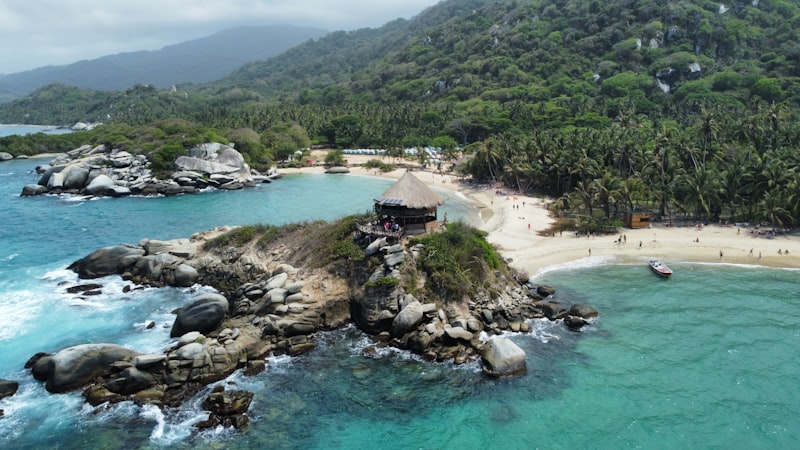
Open in Google Maps →Where the snow-capped peaks of the Sierra Nevada de Santa Marta — the world’s highest coastal mountain range — plunge into the Caribbean Sea, Tayrona National Park protects a stunning mosaic of tropical jungle, boulder-strewn beaches, coral reefs, and sacred indigenous territory. The park stretches along 85 kilometers of coastline east of Santa Marta, and reaching its most beautiful beaches requires a moderately challenging hike through dense forest alive with howler monkeys, colorful tanagers, and iridescent blue morpho butterflies. The reward is a string of postcard-perfect coves — Cabo San Juan, with its iconic palm-topped boulder, is the most famous, while the more secluded Playa Brava and La Piscina offer quieter alternatives with exceptional snorkeling.
Tayrona is much more than a beach destination. The park lies within the ancestral territory of the Kogi, Wiwa, and Arhuaco peoples, who continue to regard the Sierra Nevada as the heart of the world. The ancient ruins of Pueblito, a stone city built by the Tayrona civilization over 1,000 years ago, can be reached via a steep jungle trail from Cabo San Juan and offer a humbling glimpse into the sophistication of pre-Columbian Caribbean cultures. Camping under the stars at Cabo San Juan, in hammocks slung beneath a thatched palapa on a rocky promontory above the sea, is one of Colombia’s most iconic travel experiences.
Pro tip: Camp overnight at Cabo San Juan to see the beach at sunrise before the day-trippers arrive — reserve hammock spots early as they fill up fast. Bring all your own food and water to save on inflated park prices, and wear sturdy shoes for the jungle trails, which are rocky and can be muddy even in dry season.