
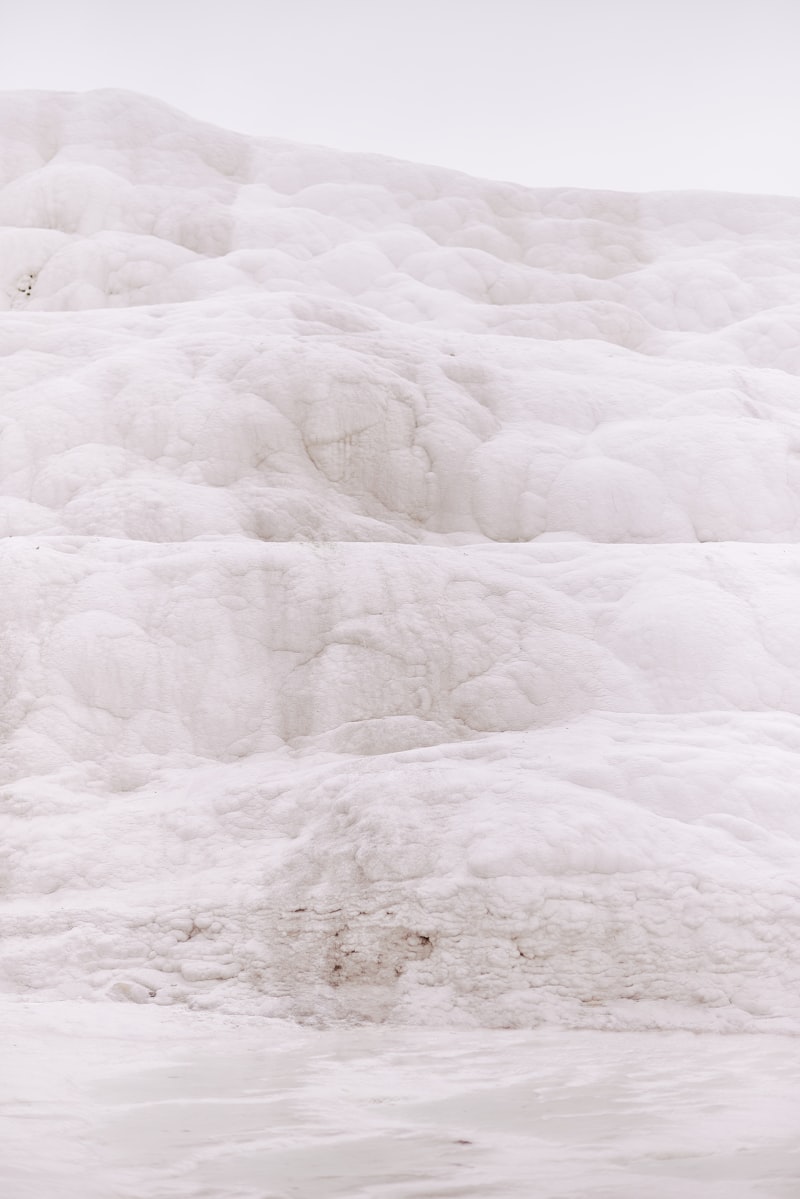
Pamukkale Travertine Terraces
Pamukkale, 20190 Denizli Province, Turkey
Open in Google Maps →Pamukkale, meaning Cotton Castle in Turkish, is one of the most surreal natural landscapes on Earth. Over millennia, calcium-rich thermal waters have cascaded down a 200-meter-high hillside, depositing layer upon layer of brilliant white travertine, creating a series of terraced pools that resemble frozen waterfalls or a mountainside draped in snow. The warm, mineral-rich water collects in the shallow turquoise pools, and visitors are invited to wade barefoot across the terraces, feeling the smooth, warm stone beneath their feet while taking in views across the Menderes River valley. At sunset, the terraces glow pink and gold, creating a scene of almost unreal beauty.
At the top of the terraces lies the ancient Greco-Roman city of Hierapolis, founded in the 2nd century BC around these very hot springs. The site contains remarkably well-preserved ruins including a massive theater, an extensive necropolis with over 1,200 tombs, and the legendary Antique Pool where visitors can swim among submerged Roman columns in warm, effervescent mineral water said to have therapeutic properties. The combination of the otherworldly natural formations below and the rich archaeological heritage above makes Pamukkale a destination unlike anything else in the Mediterranean.
Pro tip: Remove your shoes at the bottom of the terraces and walk up through the pools rather than entering from the Hierapolis side at the top. This way you experience the terraces at their most dramatic and arrive at the ancient city as a rewarding finale. Visit the Antique Pool early, as it has a capacity limit and can fill up by midday during peak season. Bring sunglasses, as the white travertine is blindingly reflective in direct sunlight.