
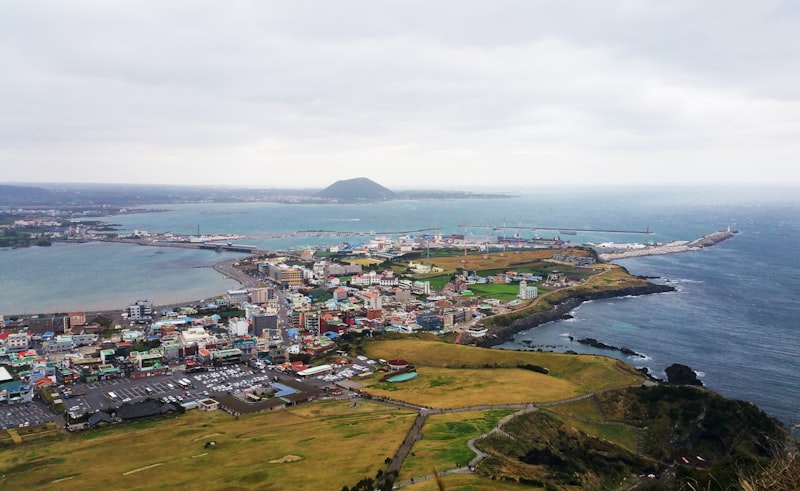
Jeju Island
Jeju Special Self-Governing Province, South Korea
Open in Google Maps →Jeju Island, South Korea’s largest island and a UNESCO World Heritage Site, rises from the sea about 80 kilometers off the southern coast like a world unto itself. Dominated by the dormant Hallasan volcano — South Korea’s tallest peak at 1,950 meters — the island is a geological wonderland of lava tubes, crater lakes, dramatic sea cliffs, and waterfalls that cascade directly into the ocean. The Jeju Olle walking trails wind along 425 kilometers of coastline, passing through tangerine orchards, past haenyeo (female free-divers) harvesting seafood from the rocky shores, and along black volcanic beaches that contrast sharply with turquoise waters.
Beyond its natural splendor, Jeju has a distinct culture shaped by centuries of relative isolation from the mainland. The iconic dol hareubang stone statues guard villages across the island, and the haenyeo diving tradition has been recognized by UNESCO as an Intangible Cultural Heritage. The island’s food scene is exceptional too, with black pork barbecue, fresh-caught abalone porridge, and hallabong citrus that you’ll find nowhere else in Korea.
Pro tip: Rent a car to properly explore the island — public transport is limited and the best sites are spread across the coast. Don’t skip the Manjanggul Lava Tube, one of the finest in the world, and catch sunrise at Seongsan Ilchulbong (Sunrise Peak) for a truly unforgettable moment.