
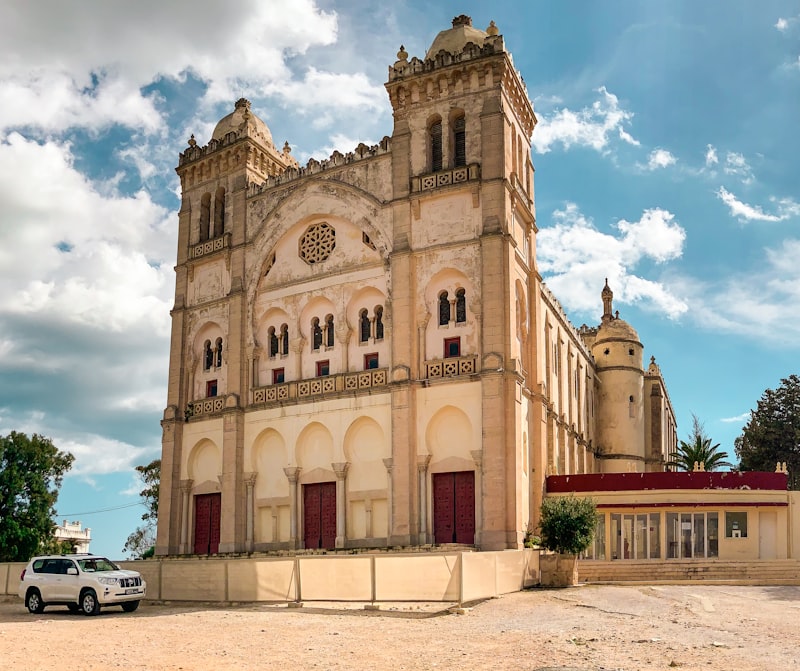
Carthage Ruins
Carthage Archaeological Site, Carthage 2016, Tunis, Tunisia
Open in Google Maps →Once the mighty capital of a Mediterranean empire that rivaled Rome itself, Carthage today is a sprawling UNESCO World Heritage Site spread across a residential suburb on the coast north of Tunis. Founded by Phoenician settlers in the 9th century BC, the city grew into one of the wealthiest and most powerful in the ancient world before its total destruction by Rome in 146 BC. The archaeological remains span multiple eras — from the haunting Tophet sanctuary where Punic stelae mark ancient sacrificial offerings, to the massive Antonine Baths that were once the largest Roman baths outside of Rome, their surviving columns still reaching impressively toward the Mediterranean sky. The hilltop Byrsa quarter offers sweeping views over the Gulf of Tunis, and the Carthage National Museum houses a remarkable collection of Punic masks, Roman mosaics, and artifacts that trace the city’s dramatic rise and fall across eight centuries.
Pro tip: Start at the Byrsa Hill museum for historical context before exploring the scattered sites — the combined ticket covers all locations, and a taxi between them costs just a few dinars since the sites are spread over several kilometers.