
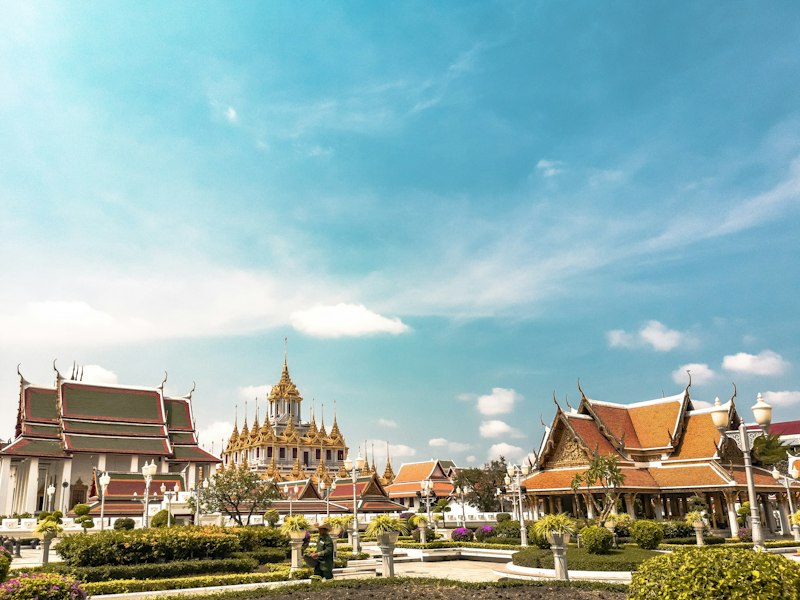
Ayutthaya Historical Park
Pratu Chai Sub-district, Phra Nakhon Si Ayutthaya 13000, Thailand
Open in Google Maps →The ancient city of Ayutthaya was once one of the largest and most cosmopolitan cities in the world, serving as the capital of the Kingdom of Siam from 1350 until its devastating destruction by Burmese invaders in 1767. Today, the ruins of this magnificent city form a UNESCO World Heritage Site that sprawls across an island at the confluence of three rivers, about 80 kilometers north of Bangkok. Towering prang (reliquary towers), headless Buddha statues, crumbling monastery walls, and massive reclining Buddhas hint at the extraordinary grandeur that once rivaled contemporary European capitals.
The most iconic image of Ayutthaya is the Buddha head entwined in the roots of a banyan tree at Wat Mahathat, a symbol of nature slowly reclaiming what remains of human ambition. Other highlights include the imposing Wat Phra Si Sanphet with its three signature chedis (stupas) that once held royal ashes, and the beautifully restored Wat Chaiwatthanaram, whose Khmer-style silhouette against a sunset sky is one of Thailand’s most photographed scenes.
Pro tip: Rent a bicycle from one of the shops near the train station for about ₿50 per day — it is the perfect way to explore the sprawling ruins at your own pace. The sites are spread out but flat, making cycling easy and far more enjoyable than navigating by tuk-tuk. Time your visit to Wat Chaiwatthanaram for sunset, and bring a flashlight if you want to explore the atmospheric interior passages of the larger temples.