
Abu Simbel Temples
Abu Simbel, Aswan Governorate, Egypt
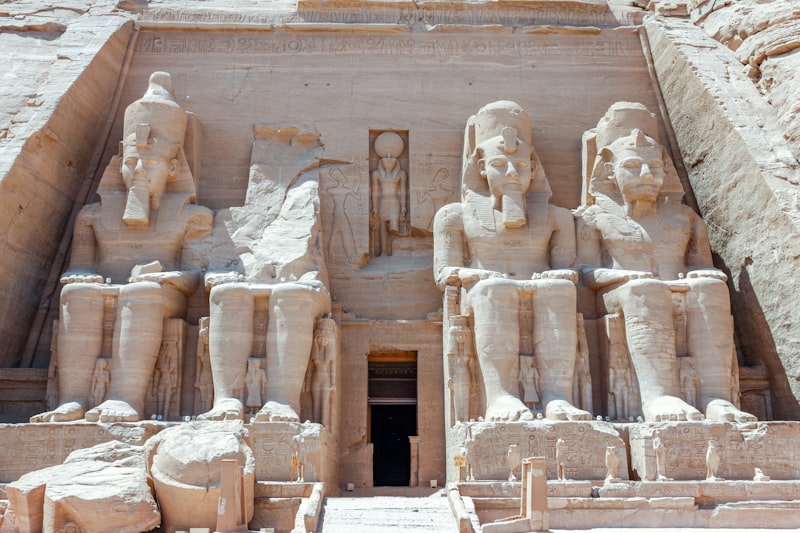
Open in Google Maps →The twin temples of Abu Simbel are among the most awe-inspiring monuments of the ancient world, carved directly into a sandstone cliff on the western bank of Lake Nasser in the deep south of Egypt, just 40 kilometers from the Sudanese border. Built by Pharaoh Ramesses II in the 13th century BC, the Great Temple features four colossal seated statues of the pharaoh, each standing 20 meters tall, flanking the entrance with an expression of serene power that has not diminished in over 3,200 years. The interior penetrates 56 meters into the cliff through a series of halls lined with carved reliefs depicting Ramesses’ military triumphs, particularly the Battle of Kadesh, before reaching the inner sanctuary where four seated gods await in perpetual darkness. Twice a year, on February 22 and October 22, the rising sun sends a shaft of light 60 meters through the temple to illuminate the faces of three of the four statues in the sanctuary, an alignment so precise that it has endured more than three millennia, a testament to the extraordinary astronomical knowledge of the ancient Egyptian architects.
The smaller adjacent temple, dedicated to the goddess Hathor and Ramesses’ beloved wife Nefertari, is adorned with six standing figures and contains beautifully preserved painted reliefs. What makes Abu Simbel doubly remarkable is the story of its modern rescue: in the 1960s, the entire complex was painstakingly cut into blocks and relocated 65 meters higher up the cliff to save it from the rising waters of Lake Nasser behind the Aswan High Dam, in one of the greatest feats of archaeological engineering ever undertaken by UNESCO.
Pro tip: Take the early morning flight from Aswan (30 minutes each way) rather than the grueling 3-hour overland convoy to arrive when the temples first open and the morning light makes the facade glow golden. If you can time your visit for February 22 or October 22, the Sun Festival draws crowds from around the world but witnessing the solar alignment is a once-in-a-lifetime experience worth the effort.